
How Much Does a New Roof Cost in Melbourne, FL in 2026? A Homeowner’s Pricing Guide
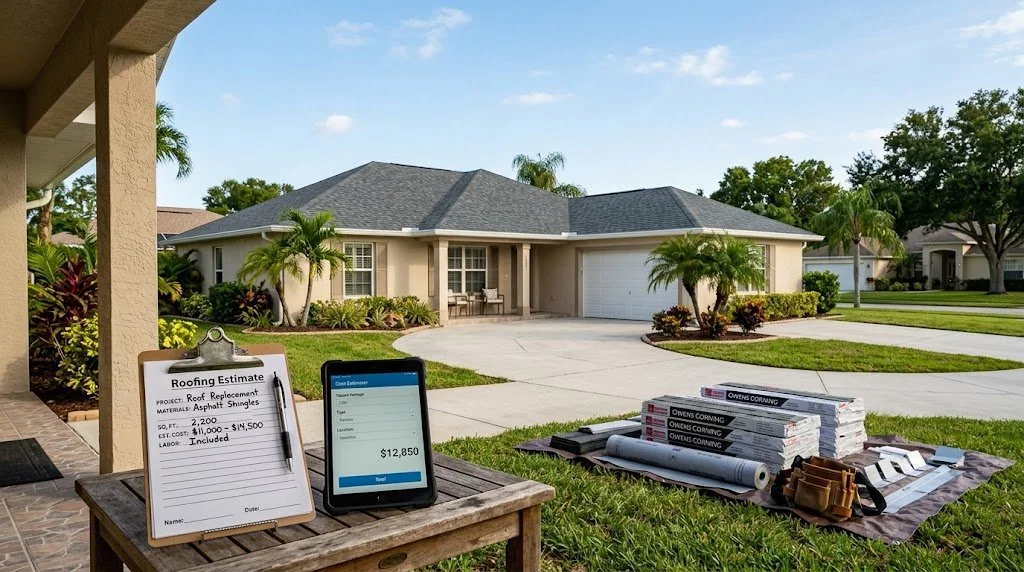
How much does a new roof cost in Melbourne, FL in 2026? For many homeowners, the answer depends on the size of the roof, the roofing material, the condition of the decking, the slope and complexity of the home, local labor, permits, and whether hidden damage is found during tear-off.
In Melbourne and across Brevard County, roof replacement costs can also be affected by Florida weather. Heavy rain, heat, humidity, wind exposure, tropical storms, and coastal conditions can all influence the type of roofing system a homeowner chooses and what the project requires.
As a general planning range, many Melbourne homeowners replacing an asphalt shingle roof in 2026 may see estimates somewhere around $10,000 to $25,000 for a typical single-family home. Smaller, simpler roofs may cost less, while larger roofs, steep roofs, metal roofs, tile roofs, structural repairs, or homes with complex rooflines can cost more.
This guide explains what affects roof replacement pricing, what homeowners should look for in an estimate, and why the lowest quote is not always the best long-term value.
What Is the Average New Roof Cost in Melbourne, FL in 2026?
A new roof in Melbourne, FL in 2026 can vary widely, but many standard asphalt shingle roof replacements may fall around $10,000 to $25,000 depending on roof size, materials, tear-off, roof pitch, decking condition, ventilation, flashing, and local installation requirements. Metal, tile, complex rooflines, or major wood repairs can raise the total cost.
The most accurate way to know your cost is to get a roof-specific inspection and written estimate. Online averages can help homeowners plan, but they cannot account for the actual roof size, damage, material choice, or code-related requirements of one specific home.
Why Roof Replacement Prices Vary So Much
Two homes in the same neighborhood can have very different roof replacement costs. One roof may be simple, low-slope, and easy to access. Another may have multiple valleys, skylights, chimneys, steep sections, damaged decking, and old layers that need removal.
That is why roof pricing should never be judged by square footage alone. The cost of a new roof depends on the full roofing system, not just the visible shingles or panels.
1. Roof Size Is Usually the First Cost Driver
Roofing estimates are often calculated by roof area, not just the home’s interior square footage. A 2,000-square-foot home does not always have a 2,000-square-foot roof. Roof slope, overhangs, garages, porches, and roof design can all increase the actual roof surface area.
Roofers often measure roofing in “squares.” One roofing square equals 100 square feet of roof area. The more squares your roof has, the more materials, labor, underlayment, fasteners, disposal, and time the project may require.
Homeowners should expect roof size to affect:
Material quantity: Larger roofs need more shingles, underlayment, starter strips, ridge caps, and accessories.
Labor time: More roof area usually means more installation time.
Tear-off and disposal: Larger roofs create more debris if old material must be removed.
Final estimate total: Even a modest price difference per square can add up on a larger roof.
Limitation Note: Online roof-size calculators can be helpful, but they may not be exact. A professional measurement is usually needed for accurate pricing.
2. Roofing Material Has a Major Impact on Price
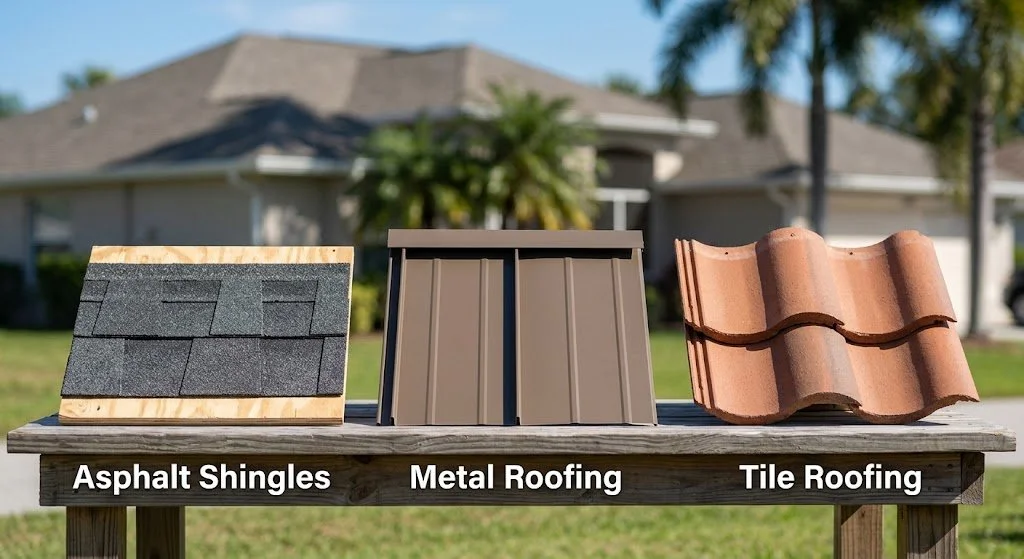
The material you choose is one of the biggest factors in the cost of a new roof. In Melbourne, FL, common residential roofing options may include asphalt shingles, architectural shingles, metal roofing, and tile roofing. Each option has a different cost range, appearance, lifespan, maintenance profile, and installation requirement.
As a general planning guide:
Asphalt shingles: Usually one of the more affordable roof replacement options.
Architectural shingles: Often cost more than basic shingles but may offer a stronger appearance and better performance.
Metal roofing: Usually costs more upfront but may appeal to homeowners looking for durability and long-term value.
Tile roofing: Often carries a higher cost and may require structural considerations depending on the home.
For many Melbourne homeowners, asphalt shingles are the starting point for budget planning. Metal and tile may increase the project cost, especially if the roof is large, complex, or requires additional preparation.
Limitation Note: Material price alone does not show the full project cost. Labor, tear-off, underlayment, flashing, ventilation, decking, permits, and roof complexity also affect the estimate.
3. Tear-Off, Disposal, and Old Roof Layers Can Add Cost
If the old roof needs to be removed, the project may include tear-off labor, disposal fees, dumpster costs, and time to prepare the roof deck for the new system. A roof with multiple old layers, damaged materials, or heavy debris may cost more than a clean, straightforward replacement.
Tear-off can affect pricing because it may reveal:
Rotten decking: Soft or damaged wood may need replacement before new roofing is installed.
Old leak damage: Previous moisture problems may be hidden under shingles.
Poor past installation: Missing components or improper layers may need correction.
Extra disposal needs: More old material means more hauling and disposal work.
Homeowners should ask whether the estimate includes tear-off and disposal or whether those items are listed separately.
Limitation Note: Some damage cannot be fully confirmed until the old roof is removed. That is why estimates may include a separate line item for decking replacement if needed.
4. Decking Repairs Can Change the Final Price
The roof deck is the wood surface beneath the roofing material. If decking is soft, rotted, delaminated, or damaged by past leaks, it usually needs to be replaced before the new roof can be installed properly.
In Melbourne, hidden decking problems may be more likely on roofs that have dealt with repeated heavy rain, leaks, poor ventilation, or storm damage. A roof may look acceptable from outside while still having weak areas underneath.
Decking problems may be connected to:
Old roof leaks: Water may have weakened the wood over time.
Attic moisture: Poor ventilation can contribute to damp roof decking.
Storm damage: Wind-driven rain can worsen existing weak areas.
Age: Older roofs may have more hidden deterioration.
Limitation Note: A contractor may not know the full decking repair cost until the old roof is removed and the deck can be inspected directly.
5. Roof Pitch, Height, and Complexity Affect Labor
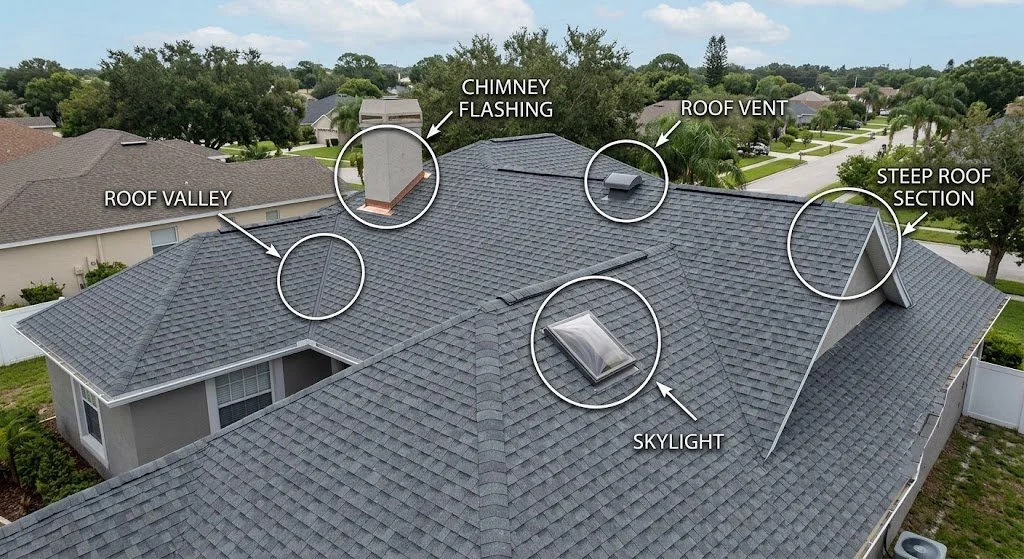
A simple, low-slope roof is usually easier to work on than a steep or complex roof. Roofs with multiple valleys, dormers, skylights, chimneys, wall transitions, and difficult access points often require more labor, more flashing detail, and more time.
Complexity may increase cost when the roof has:
Multiple roof valleys: Valleys require careful waterproofing and detail work.
Steep slopes: Steeper roofs may require more safety setup and labor time.
Two-story or tall sections: Height can affect access and staging.
Skylights, chimneys, or vents: Penetrations and transitions require careful flashing.
Limited access: Tight spaces can make material delivery and cleanup harder.
This is one reason two homes with similar square footage can receive very different roof replacement estimates.
Limitation Note: Roof complexity is difficult to judge from the ground. A roof may appear simple from the front but have several valleys, transitions, or penetrations on the back side.
6. Flashing, Ventilation, Underlayment, and Accessories Matter
A roof replacement is not just new shingles or panels. A complete roofing system may include underlayment, drip edge, starter strip, ridge caps, pipe boots, flashing, ventilation components, fasteners, and sealants. These parts help the roof shed water and perform properly.
Important estimate details may include:
Underlayment: Helps protect the roof deck beneath the visible roof covering.
Drip edge: Helps direct water away from roof edges.
Flashing: Protects vulnerable transitions and penetrations.
Ventilation: Helps manage attic heat and moisture.
Pipe boots and vents: Protect common leak-prone areas.
Skipping or underpricing these components can make a quote look cheaper upfront, but it may create problems later.
Limitation Note: Homeowners should compare what each estimate includes, not just the final price. A lower estimate may leave out important system components.
7. Permits, Local Requirements, and Florida Weather Exposure Can Affect Cost
Florida roofing projects may involve local permitting, product approval requirements, wind-related installation details, and inspections. Melbourne homeowners should ask what is included in the estimate and whether permit-related costs are part of the quoted price.
Florida weather also matters. A roof in Melbourne may face heavy rain, wind, tropical systems, heat, humidity, and storm exposure. Because of that, roof replacement should be viewed as a long-term protection decision, not just a cosmetic update.
Cost can be affected by:
Permit handling: Some estimates include this, while others separate it.
Code-related details: Proper installation may require specific materials or methods.
Wind exposure: Coastal and storm-prone areas may need stronger attention to fastening and system details.
Inspection requirements: Local rules may affect project timing and documentation.
Limitation Note: Permit and code requirements can vary by project and location. Homeowners should confirm details with the contractor and local building department.
What Should Be Included in a Roof Replacement Estimate?
A clear estimate should explain more than the final price. Homeowners should be able to see what is included, what is excluded, and what could change after tear-off.
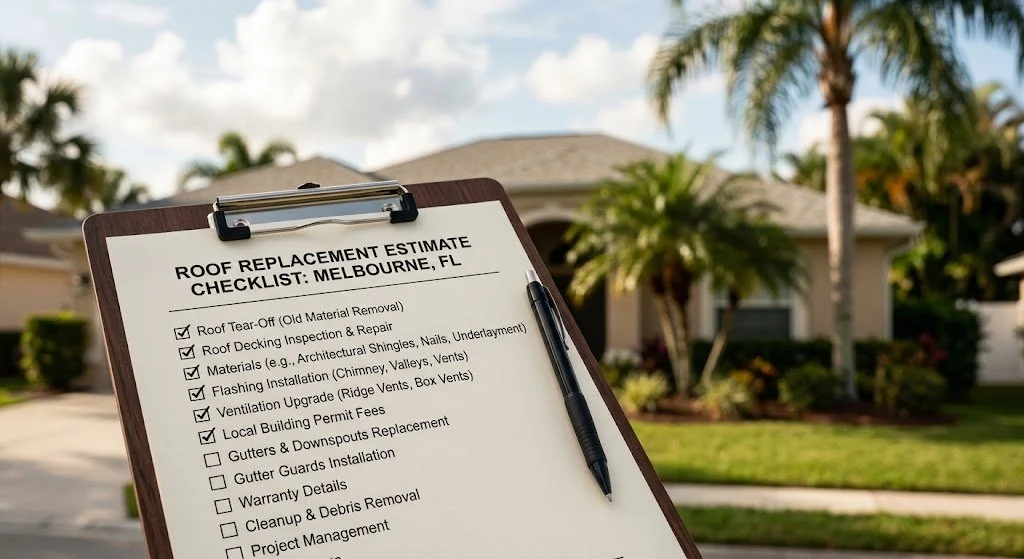
A good roofing estimate may include:
Roof measurement or estimated roof squares
Material type and product details
Tear-off and disposal information
Underlayment and drip edge details
Flashing, pipe boots, vents, and ridge cap details
Ventilation notes
Decking replacement cost if needed
Permit handling if applicable
Labor and installation scope
Warranty information
Payment terms and project timeline
Why the Cheapest Roof Quote May Not Be the Best Value
It is normal to compare prices, but homeowners should be careful with quotes that are much lower than others. A very low estimate may leave out important items, use lower-grade materials, skip needed ventilation details, or exclude decking repairs and permit costs.
When comparing roof quotes, ask:
Are the same materials being compared?
Is tear-off included?
Are underlayment, drip edge, flashing, vents, and pipe boots included?
How is damaged decking priced?
Is cleanup and disposal included?
What warranty is included?
What happens if hidden damage is found?
A roof is a major home protection system. The goal is not just to find the lowest number, but to understand what the estimate includes and whether the roof will be installed properly for Melbourne’s weather conditions.
When Should Melbourne Homeowners Start Planning for a New Roof?
Homeowners should start planning for roof replacement before leaks or storm damage become severe. Waiting too long can lead to higher repair costs, interior damage, and more urgent decision-making.
It may be time to get an estimate if you notice:
Recurring roof leaks
Missing, cracked, or curling shingles
Granules collecting in gutters
Soft spots or decking concerns
Widespread storm damage
Staining on ceilings or attic decking
A roof that is near the end of its expected life
If you are unsure whether repair or replacement makes more sense, a professional roof inspection in Melbourne, FL can help clarify the condition of the roof and what options are worth considering.
External Resources for Homeowners
Homeowners who want more general education about roofing costs, roof damage, and contractor estimates can review trusted third-party resources:
Angi roof replacement cost guide
HomeAdvisor Florida roof replacement cost guide
HomeGuide roof replacement cost guide
National Roofing Contractors Association
Limitation Note: Online cost guides are useful for planning, but they do not replace a roof-specific estimate. Your actual roof cost depends on your home, material choice, local requirements, and any hidden damage found during inspection.
Conclusion
A new roof cost in Melbourne, FL in 2026 can vary widely, but most homeowners should expect the estimate to depend on much more than the home’s square footage. Roof size, materials, tear-off, decking, pitch, flashing, ventilation, permits, and hidden damage can all affect the final price.
For many Melbourne homeowners, asphalt shingle replacement may be the most budget-friendly starting point, while metal or tile roofing can raise the investment. The best estimate is the one that explains the full system, not just the surface material.
If you are planning a roof replacement and want a clearer idea of your options, schedule a roof replacement estimate in Melbourne, FL and get your roof reviewed before making a decision.
Frequently Asked Question
-
Many asphalt shingle roof replacements in Melbourne, FL may fall around $10,000 to $25,000, but the final price depends on roof size, material, roof complexity, tear-off, decking condition, ventilation, flashing, permits, and labor.
-
Roof size and material are usually the biggest cost drivers. However, roof pitch, height, tear-off, decking repairs, flashing, ventilation, and local requirements can also change the final estimate.
-
In many cases, asphalt shingles cost less upfront than metal roofing. Metal may cost more initially but may appeal to homeowners who want a longer-lasting or more durable roof system.
-
Yes. Soft decking, old leaks, rot, damaged flashing, poor ventilation, or storm-related issues can increase the final cost once the old roof is removed and the structure is inspected.
-
Yes. Comparing estimates can help homeowners understand pricing, materials, scope, warranty, and what each contractor includes. Make sure the estimates are comparing similar materials and work scopes.
-
Yes. RoofLab can help homeowners schedule a roof inspection, understand roof condition, and get clearer guidance about whether repair or replacement makes sense.