
Roof Leak After Heavy Rain in Melbourne, FL? 7 Places the Water Could Be Coming From

Roof leak after heavy rain in Melbourne, FL is a problem many homeowners notice only after a strong storm passes. The roof may look fine from the ground, but water can still find its way inside through small openings, worn materials, or weak points around flashing, vents, gutters, and roof edges.
In Melbourne, Florida, heavy rain, humidity, wind-driven moisture, and tropical weather can all put extra pressure on a roofing system. A leak does not always mean the entire roof is failing, but it does mean something needs attention. The key is figuring out where the water may be entering before the damage spreads to insulation, ceilings, drywall, or framing.
If your home has developed a leak after a recent storm, this guide explains seven of the most common places the water could be coming from and what Melbourne homeowners should check next.
Why Is My Roof Leaking After Heavy Rain?
A roof leak after heavy rain usually happens because water is getting in through one of the roof’s vulnerable areas. Common causes include damaged shingles, worn flashing, cracked pipe boots, roof valleys, clogged gutters, wall transitions, and attic-related moisture issues. Heavy rain can expose weak points that may not leak during lighter weather.
Why Heavy Rain Exposes Roof Problems Faster
Not every roof leaks during a normal rainstorm. Some only begin leaking when the rain is heavy, wind-driven, or falling for a long period of time. That is because stronger storms can overwhelm drainage systems, push water under shingles, and exploit weak spots around roof penetrations or transitions.
In a place like Melbourne, roofs also deal with humidity, salt air, storm exposure, and repeated seasonal rain. Over time, these conditions can weaken parts of the roof system that still look normal from the street.
1. Damaged or Lifted Shingles
One of the most common reasons for a roof leak after heavy rain is damaged shingles. Shingles are designed to shed water, but if they are cracked, lifted, curled, or missing, heavy rain can move beneath them and reach the layers underneath.
Homeowners should look for:
Missing shingles: Open roof areas are more exposed to water intrusion.
Lifted shingle edges: Wind may have broken the seal, allowing rain to get underneath.
Cracked or brittle shingles: Aging materials may not shed water properly anymore.
Patchy or uneven roof color: This may suggest granule loss or weathered areas.
Limitation Note: A ground-level view can reveal obvious shingle problems, but it cannot confirm hidden storm damage or whether water has already moved under the roofing system.
2. Worn or Loose Flashing
Flashing is one of the biggest leak-risk areas on any roof. It protects transitions where the roof meets another surface, including chimneys, walls, skylights, dormers, and roof edges. If flashing has loosened, corroded, shifted, or separated, heavy rain can find a path into the home.
Check for:
Loose flashing edges: Gaps may allow water entry during strong rain.
Cracked sealant: Older sealant can fail and create small openings.
Rust or deterioration: Corrosion may weaken the flashing over time.
Interior stains near walls or chimneys: These may point to flashing-related leaks.
Limitation Note: Flashing failures are often subtle and may not be visible from the ground. Heavy rain may reveal the symptom, but a closer inspection is usually needed to confirm the cause.
3. Cracked Pipe Boots or Roof Penetrations
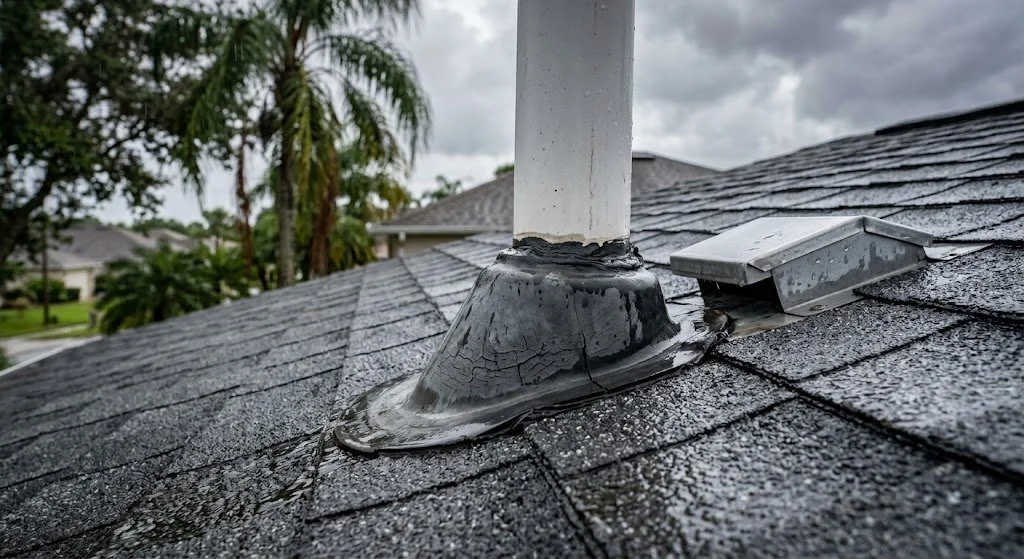
Plumbing vents, exhaust vents, and other roof penetrations are common sources of roof leaks after heavy rain. Rubber pipe boots can crack from heat, UV exposure, and age. Once the seal around the pipe weakens, rainwater can slip through the opening and into the attic or ceiling below.
Signs to watch for include:
Water stains near bathrooms or hallways: These areas often sit below roof penetrations.
Cracked rubber boots: A split pipe boot can allow direct water entry.
Loose vent covers: Wind and rain may shift them out of place.
Old or failing sealant: Dried or shrunken sealant may no longer protect the opening.
Limitation Note: Penetration leaks may look minor at first, but water can travel before becoming visible indoors, making the source harder to identify without inspection.
4. Roof Valleys That Are Trapping Water
Roof valleys carry a large amount of water during heavy rain because they collect runoff from two roof slopes. If a valley has worn shingles, damaged flashing, debris buildup, or poor drainage, water may slow down or push into vulnerable roof areas.
Common warning signs include:
Debris in the valley: Leaves and twigs can block water flow.
Dark staining or uneven wear: These may suggest ongoing moisture exposure.
Leaks after long rainfall: Valleys may leak when water volume increases.
Water marks in the attic near the valley line: This may point to valley-related intrusion.
Limitation Note: Valleys may appear fine from a distance, but small drainage issues or worn materials can become more serious during prolonged heavy rain.
5. Clogged Gutters and Backed-Up Roof Edges
Sometimes the leak is not starting in the middle of the roof at all. Gutters that are clogged with leaves, roof granules, or storm debris can cause water to back up near the roof edge. Once water stops draining properly, it may work its way under shingles or behind fascia and soffit areas.
Homeowners should watch for:
Overflowing gutters during rain: This often means water is not draining correctly.
Sagging gutter sections: Heavy debris can pull gutters away from the roofline.
Water staining along fascia or exterior walls: This may suggest drainage problems.
Granules and debris buildup: This can reduce water flow and signal roof wear.
Limitation Note: A clogged gutter may be part of the problem, but it does not always explain the full leak pattern. Additional roof-edge damage may also be present.
6. Roof-to-Wall Transitions and Exterior Joints
Where a roof connects to a wall is another common place for heavy-rain leaks to develop. These transitions depend on proper flashing, sealing, and drainage. If siding, trim, step flashing, or sealant has failed, water may enter behind the wall or roof covering during strong rain.
Possible signs include:
Leaks near exterior walls: Water stains may show up near windows or upper wall corners.
Loose siding or trim: Exterior movement can create openings.
Staining around wall transitions: This may suggest repeated moisture intrusion.
Leaks during wind-driven rain only: This often points to a transition or flashing issue.
Limitation Note: Roof-to-wall leaks can be tricky because the visible stain inside may be several feet away from where the water actually entered.
7. Hidden Attic Moisture or Previous Storm Damage
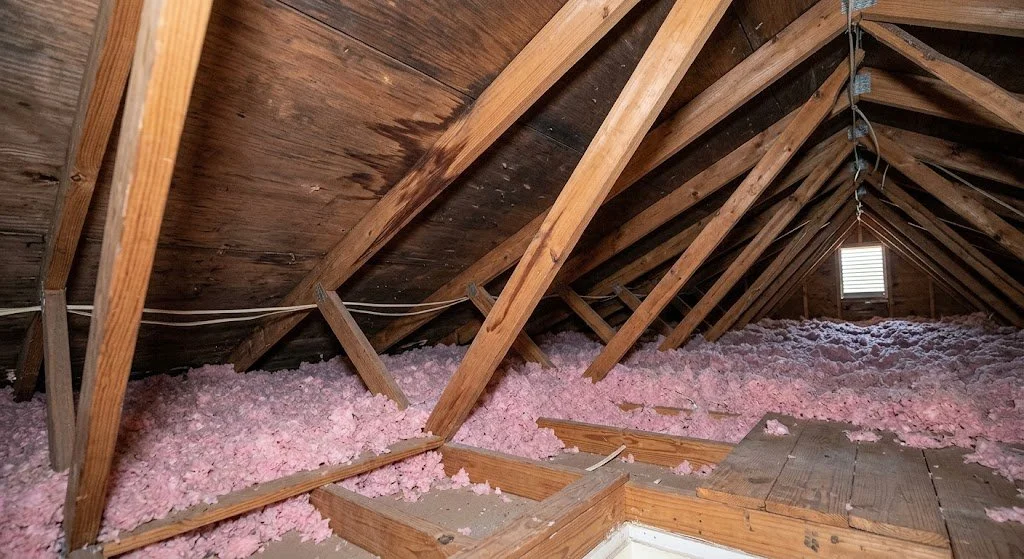
Sometimes the water is entering through a roof area that already had a weakness before the last storm. Hidden attic moisture, old storm damage, or a small leak that went unnoticed can all become worse during heavy rain.
If the attic is safe to access, check for:
Damp insulation: This may indicate recent water entry.
Dark stains on roof decking: These can show active or past moisture movement.
Rusted nails: Rust may suggest ongoing humidity or roof moisture.
Musty odors: A damp smell may point to trapped moisture.
Daylight through the roof boards: Openings may be allowing both light and water in.
Limitation Note: Attic clues can reveal that there is a roof problem, but they do not always confirm the exact exterior entry point. Water can travel through framing and insulation before becoming visible.
What Melbourne Homeowners Should Do Next
If your roof leaks only after heavy rain, do not ignore it just because the dripping stops once the weather clears. Intermittent leaks often point to real roof weaknesses that can get worse over time. The next storm may push even more water into the same opening.
A good next step is to document where the leak appeared, when it happened, and whether it followed heavy rain, wind-driven rain, or extended storm activity. Photos of ceiling stains, attic moisture, wet insulation, and exterior problem areas can also be helpful.
If you need a clearer answer about where the water may be coming from, scheduling a professional roof leak inspection in Melbourne, FL can help identify the source and clarify whether the issue involves shingles, flashing, gutters, valleys, penetrations, or hidden storm damage.
External Resources for Homeowners
Homeowners who want general education about heavy rain and storm-related roof concerns can review these trusted resources:
National Weather Service Flood Safety
National Roofing Contractors Association
Limitation Note: Third-party resources are useful for general education, but they do not replace an inspection of your specific roof. Every leak pattern is different depending on roof design, age, storm exposure, and maintenance history.
Conclusion
A roof leak after heavy rain in Melbourne, FL can come from several different places, and the source is not always obvious from the ground. Damaged shingles, worn flashing, cracked pipe boots, roof valleys, clogged gutters, wall transitions, and hidden attic moisture are some of the most common causes.
The important thing is not to wait for the next storm to make the problem worse. If the leak has already shown up once, the roof has likely revealed a weak point that should be reviewed.
If you want help identifying where the water may be entering, request a professional roof leak inspection in Melbourne, FL to get a clearer answer before more rain moves through.
Frequently Asked Questions
-
Heavy rain can expose weak points that lighter rain does not. Water may be pushed under shingles, forced through flashing gaps, or backed up by clogged gutters during stronger storms.
-
Yes. Leaks can begin around flashing, vents, pipe boots, valleys, roof edges, and wall transitions even if the shingles look mostly intact.
-
If it is safe to do so, the attic may show useful clues such as damp insulation, water stains, or musty odors. However, homeowners should avoid unsafe attic conditions and should not climb onto the roof.
-
It can be. If water is actively entering the home, affecting electrical areas, or causing ceiling sagging, it should be addressed quickly to prevent more interior damage.
-
If your roof leaks after heavy rain, has not been inspected recently, or has been through recent storms, it is a good time to schedule an inspection and understand what needs attention.