
Why Fall Is a Good Time to Check Your Roof in Spanish Fort, AL
Fall roof inspection in Spanish Fort AL is a smart step for homeowners who want to understand how their roof handled summer heat, humidity, rain, tropical weather, and storm activity. Even if the roof looks fine from the ground, small issues can develop after months of Gulf Coast moisture and seasonal weather.
Spanish Fort homes often deal with mature trees, coastal humidity, heavy rain, strong sun, falling leaves, and wind-driven storms. These conditions can affect shingles, roof valleys, gutters, flashing, roof vents, attic ventilation, and roof edges over time.
Fall gives homeowners a practical window to check the roof before cooler weather, winter rain, and another season of moisture expose weak areas. Not every warning sign means the roof needs replacement, but a fall roof check can help catch small concerns before they become leaks, attic moisture, or interior water damage.
Why Is Fall a Good Time to Check Your Roof?
Fall is a good time to check your roof in Spanish Fort, AL because the roof may have gone through months of heat, humidity, heavy rain, tropical moisture, and storm activity. Homeowners should look for lifted shingles, granule loss, clogged gutters, roof valley debris, loose flashing, cracked pipe boots, roof-edge stains, attic moisture, and ceiling stains.
A fall roof inspection in Spanish Fort AL can help determine whether the roof needs maintenance, repair, monitoring, or replacement planning.
Why Fall Roof Checks Matter in Spanish Fort
Spanish Fort sits in a coastal Alabama environment where roofs are exposed to humidity, heat, heavy rain, wind-driven storms, falling debris, and seasonal moisture. Even without major storm damage, a roof can develop small weak points after a long warm-weather season.
That is why a fall roof inspection in Spanish Fort AL should include more than a quick look at the shingles. A complete seasonal check should include gutters, roof valleys, vents, flashing, roof edges, soffits, fascia, attic moisture, and interior leak signs.
1. Check for Shingle Wear After Summer Heat
Shingles protect the roof from rain, wind, sunlight, and debris. After a long Alabama summer, shingles may show small signs of wear even if the roof still looks mostly intact.
Homeowners should look for:
Lifted shingle edges: Wind may have weakened the adhesive seal.
Curling or cracking shingles: Heat and age can stress asphalt shingles.
Missing shingles: Open areas can expose the roof system to moisture.
Patchy roof color: Uneven color may point to granule loss or aging materials.
What this may mean: Shingle wear does not always mean the roof needs replacement, but weak areas can allow water to move under the roof surface during future rain.
Limitation Note: Some shingle damage is hard to confirm from the ground. Homeowners should avoid climbing onto the roof, especially after rain or wind.
2. Look for Granules Near Gutters and Downspouts
Asphalt shingles have protective granules that help shield the roof from sun and weather. After summer heat, rain, and storm runoff, loose granules may collect near gutters, downspouts, splash areas, or driveway edges.
Granule warning signs include:
Dark grit near downspouts: This may be loose shingle granules.
Granules mixed with leaves: Stormwater may carry debris and roof material together.
Uneven roof color: Some roof sections may be wearing faster.
Repeated buildup: Heavy granule buildup may point to aging or storm-stressed shingles.
What this may mean: Granule loss can be a sign of roof aging, summer heat stress, or storm wear. It should be reviewed during a fall roof inspection in Spanish Fort AL.
3. Pay Attention to Morning Dew and Slow-Drying Roof Areas
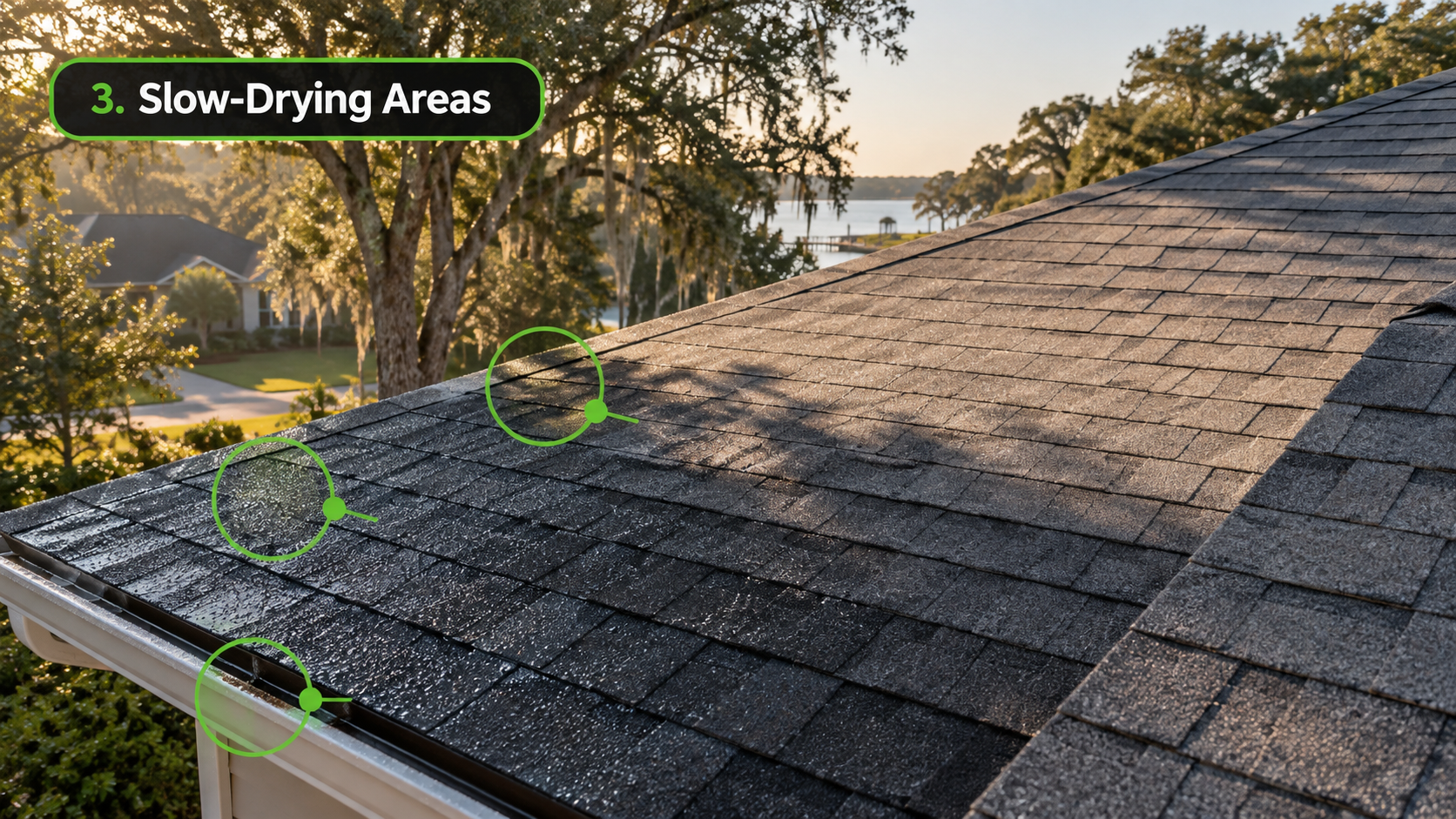
Spanish Fort AL asphalt shingle roof with shaded slow-drying areas, morning dew, and moisture patterns during fall roof maintenance.
Fall mornings can make moisture patterns easier to notice. If one part of the roof stays damp longer than the rest, it may be due to shade, debris, poor drainage, tree coverage, or ventilation concerns.
Homeowners should look for:
Dark damp roof sections: Some areas may hold moisture longer.
Shaded slopes under trees: Leaves and shade can slow drying.
Moisture near roof valleys: Valleys carry more water during rain.
Staining near roof edges: Water may be sitting longer than it should.
What this may mean: Slow-drying areas do not always mean there is a leak, but they can point to drainage, debris, ventilation, or moisture concerns that should be monitored.
4. Clear Gutters Before Fall Rain
Gutters help move water away from the roof, fascia, soffits, siding, and foundation. In Spanish Fort, gutters may collect leaves, pine needles, seed pods, shingle granules, and storm debris during the fall.
Homeowners should check for:
Leaves inside gutters: Debris can block normal drainage.
Blocked downspouts: Water may back up during the next rain.
Sagging gutter sections: Heavy debris and water can pull gutters down.
Overflow stains: Staining may show where water spilled over during storms.
What this may mean: Gutter problems can sometimes look like roof leaks because water may overflow near roof edges, soffits, fascia, and exterior walls.
Limitation Note: Gutters, roof edges, fascia, soffits, and shingles should be reviewed together when water stains appear near the upper exterior of the home.
5. Inspect Roof Valleys Near Tree Coverage
Roof valleys collect water from two roof slopes, which makes them important drainage areas. In Spanish Fort neighborhoods with tree coverage, valleys can collect leaves, pine needles, small branches, and other debris during fall.
Valley warning signs include:
Leaves gathered in the valley: Water may slow down during rain.
Pine needles packed into shingle edges: Narrow debris can hold moisture.
Dark staining in the valley: Moisture may be sitting longer than it should.
Leaks after steady rain: Water may be entering through a weak valley area.
What this may mean: Roof valley debris can increase leak risk if water is blocked, slowed, or pushed under vulnerable materials.
6. Check Flashing Around Roof Transitions
Flashing protects areas where the roof meets another surface. These areas include walls, chimneys, skylights, roof valleys, vents, dormers, and pipe penetrations. After months of heat, rain, and humidity, flashing can loosen, rust, shift, or develop cracked sealant.
Common flashing warning signs include:
Loose metal edges: Flashing may no longer sit tight against the roof.
Cracked sealant: Heat and weather can cause sealant to split.
Rust or discoloration: Moisture may be reaching metal components.
Ceiling stains near walls: Water may be entering around a roof transition.
What this may mean: Flashing problems can create leaks during rain or wind-driven weather, even when the main roof surface looks normal.
7. Check Pipe Boots, Roof Vents, and Other Openings
Any roof opening needs a proper seal. Plumbing pipe boots, roof vents, exhaust vents, and other penetrations can become weak points after long exposure to sun, rain, wind, and humidity.
Warning signs include:
Cracked pipe boots: Rubber seals can split over time.
Loose vent bases: Wind and weather may shift components.
Rust around fasteners: Moisture may be reaching metal parts.
Water stains below vents: A small leak may be starting near the opening.
What this may mean: Roof penetrations may leak during heavy rain or wind-driven rain if the seal is damaged.
8. Review Soffits, Fascia, and Roof Edges
Roof edges can show signs of water movement. Clogged gutters, wind-driven rain, and roof-edge wear can affect soffits, fascia, drip edge, and lower roofline areas.
Homeowners should look for:
Soft or stained fascia: Water may be affecting the roof edge.
Soffit discoloration: Water may be backing up or entering near the underside of the roof edge.
Peeling paint: Moisture may be affecting trim or exterior finishes.
Loose drip edge: Metal roof-edge protection may have shifted.
What this may mean: Roof-edge problems can create hidden moisture issues if they are not corrected before more rain arrives.
9. Check the Attic for Moisture or Musty Odors
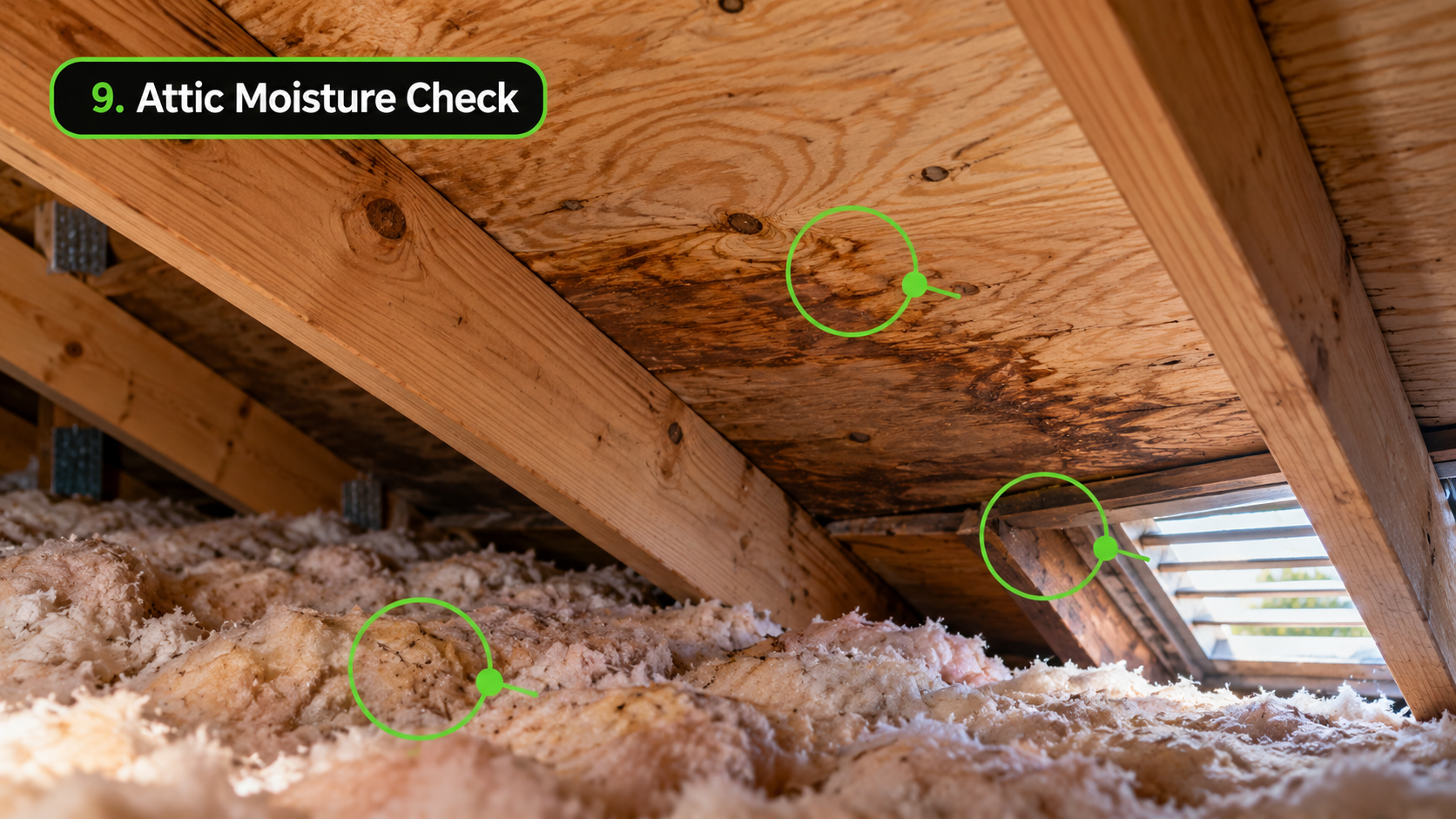
Spanish Fort AL attic with roof decking moisture staining near the eave and insulation, showing hidden attic moisture during fall roof inspection.
Some roof problems show up inside the attic before they are visible from the outside. In Spanish Fort’s humid climate, attic moisture can come from roof leaks, poor ventilation, condensation, HVAC ducts, bathroom fans, or storm-driven rain.
Attic warning signs include:
Dark roof decking stains: Moisture may be affecting the underside of the roof.
Damp insulation: Water may be entering or collecting inside the attic.
Musty odors: Trapped moisture may be present.
Rust on nail tips: Condensation or attic moisture may be affecting metal components.
What this may mean: Attic moisture should be reviewed because it may point to roof leaks, ventilation problems, humidity concerns, or storm-related damage.
Limitation Note: Attic moisture does not always mean the roof is leaking. A full inspection helps separate roof issues from ventilation, HVAC, plumbing, and indoor humidity concerns.
10. Schedule a Professional Inspection if You See Multiple Warning Signs
A fall roof inspection in Spanish Fort AL is especially helpful when several warning signs appear at once. A trained roofing professional can safely check shingles, gutters, roof valleys, flashing, roof penetrations, roof edges, attic areas, and storm-related concerns.
A roof inspection may be helpful if you notice:
Lifted, curled, or missing shingles
Granules near gutters or downspouts
Slow-drying roof areas
Clogged gutters or overflow marks
Roof valley debris near trees
Loose flashing or cracked sealant
Attic moisture or musty odors
Ceiling stains after rain
Leaks during wind-driven rain
What this may mean: The goal is not to assume the worst. The goal is to understand whether your roof needs cleaning, maintenance, repair, ventilation review, monitoring, or replacement planning.
Spanish Fort and Eastern Shore Roof Maintenance
This topic is especially relevant for homeowners in Spanish Fort, Daphne, Fairhope, Malbis, Loxley, Silverhill, Robertsdale, Stapleton, Mobile Bay communities, and Baldwin County.
Homes in this area often deal with Gulf Coast humidity, mature trees, heavy rain, falling debris, tropical moisture, wind-driven storms, and high sun exposure. These conditions make a fall roof inspection in Spanish Fort AL a smart part of seasonal home maintenance.
When to Contact RoofLab
You should contact a roofing professional if you notice lifted shingles, missing shingles, clogged gutters, roof valley debris, loose flashing, roof-edge stains, attic moisture, ceiling stains, or recurring leaks after rain.
RoofLab helps homeowners understand roof concerns, roof repair needs, storm-related damage, moisture issues, drainage problems, and replacement planning with clear inspections and practical guidance. If you are unsure whether your roof needs maintenance or repair this fall, scheduling an inspection can help you get clear answers before small issues become bigger problems.
Contact RoofLab to schedule an inspection.
Helpful External Resources for Homeowners
Ready.gov hurricane safety guidance
Ready.gov flood safety guidance
National Weather Service thunderstorm safety guidance
Energy.gov ventilation guidance
Limitation Note: General storm and home maintenance resources can help homeowners understand roof and water risks, but they cannot diagnose one specific Spanish Fort roof.
FAQ: Fall Roof Inspection in Spanish Fort, AL
Common questions Spanish Fort homeowners ask about fall roof inspections, roof maintenance, clogged gutters, roof valley debris, attic moisture, and seasonal leak warning signs.
Why is fall a good time to check my roof in Spanish Fort, AL?
Fall is a good time to check your roof because the roof may have gone through months of heat, humidity, rain, tropical moisture, and storm activity. A fall inspection can help identify shingle wear, clogged gutters, roof valley debris, flashing issues, and attic moisture before they get worse.
What roof problems should Spanish Fort homeowners look for in the fall?
Homeowners should look for lifted shingles, granule loss, clogged gutters, roof valley debris, loose flashing, cracked pipe boots, slow-drying roof areas, roof-edge stains, attic moisture, and ceiling stains after rain.
Can fall leaves and tree debris cause roof leaks?
Yes. Leaves, pine needles, and small debris can block gutters and roof valleys. When water cannot drain correctly, it may back up near roof edges, flashing, fascia, soffits, or vulnerable shingle areas.
Do I need a roof inspection if there is no visible leak?
Yes, a roof inspection may still be helpful. Some roof issues do not leak right away and may only show as shingle wear, gutter debris, loose flashing, attic moisture, or granule loss.
When should I schedule a fall roof inspection in Spanish Fort, AL?
You should schedule a fall roof inspection after rainy season, after strong storms, before winter rain, or anytime you notice roof debris, clogged gutters, shingle damage, roof-edge stains, attic moisture, or ceiling stains.
Conclusion
Fall roof inspection in Spanish Fort AL is a smart way to understand how your roof handled summer heat, humidity, rain, and storm activity. Small problems such as debris in valleys, loose flashing, granule loss, clogged gutters, and attic moisture can be easier to manage when they are found early.
Not every warning sign means your roof needs replacement. Some homes may only need cleaning, minor repair, flashing work, pipe boot replacement, ventilation review, or continued monitoring. The key is knowing what changed and getting clear guidance before small concerns become interior water damage.
If your Spanish Fort home has not had a roof inspection this fall, contact RoofLab to schedule an inspection and get clear guidance before the next round of seasonal weather.