
Falling Leaves, Gutters & Roof Leaks: A Fall Guide for Daphne Homeowners
Fall gutter maintenance in Daphne AL is an important part of protecting your roof before seasonal rain, cooler weather, and falling leaves create drainage problems. Daphne homes often sit near mature trees, wooded neighborhoods, pine debris, and Gulf Coast moisture. That combination can make gutters fill quickly during the fall.
At first, clogged gutters may not look like a roof problem. But when leaves, pine needles, seed pods, and roof granules block normal drainage, water can overflow near shingles, fascia, soffits, siding, and foundation areas. Over time, that backed-up water may create stains, hidden moisture, roof-edge leaks, attic concerns, or interior water damage.
This guide explains why gutters matter, how falling leaves can contribute to roof leaks, what Daphne homeowners should check in the fall, and when it may be time to schedule a professional roof inspection. Not every clogged gutter means your roof is leaking, but fall is a smart time to catch drainage problems before they become bigger repairs.
Can Falling Leaves and Clogged Gutters Cause Roof Leaks?
Yes. Falling leaves and clogged gutters can contribute to roof leaks when water cannot drain properly away from the roof edge. In Daphne, AL, gutters may collect leaves, pine needles, seed pods, twigs, and shingle granules during the fall. If water backs up near the fascia, soffits, roof edge, or lower shingles, moisture can move into vulnerable areas.
Fall gutter maintenance in Daphne AL helps homeowners reduce the risk of roof-edge leaks, water stains, and attic moisture.
Why Fall Gutters Matter for Daphne Homes
Daphne and the Eastern Shore experience a mix of fall debris, coastal humidity, rain, and tree coverage. Even when the roof itself is in good condition, blocked gutters can cause water to move where it should not.
That is why fall gutter maintenance in Daphne AL should be treated as part of roof maintenance, not just exterior cleaning. Gutters, downspouts, shingles, fascia, soffits, roof valleys, and attic moisture signs should all be reviewed together when fall debris starts collecting around the home.
1. Watch for Leaves and Pine Needles in the Gutters
Leaves are the most obvious fall gutter problem, but pine needles and small seed pods can be just as frustrating. They can settle into gutter channels, downspouts, gutter corners, and roof valleys. Once wet, this debris can become heavy and slow drainage.
Daphne homeowners should look for:
Leaves packed inside gutters: Water may not drain fast enough during rain.
Pine needles near downspouts: Narrow debris can create stubborn blockages.
Seed pods or twigs: Small debris can collect in gutter corners.
Wet debris sitting for days: Moisture may remain near the roof edge longer than it should.
What this may mean: Debris-filled gutters can cause water to overflow, back up, or spill near areas that were not designed to stay wet.
Limitation Note: Homeowners should avoid unsafe ladder work. If gutters are high, steep, wet, or hard to reach, professional help is safer.
2. Look for Water Overflow Marks Along the Roof Edge
When gutters clog, water often leaves clues. You may see streaks, stains, or dirty lines on the fascia, siding, soffits, or lower roof edge. These marks can show where water has been spilling over during rain.
Common overflow signs include:
Dark streaks on fascia: Water may be running over the gutter edge.
Stains below gutter corners: The gutter may be blocked or pitched incorrectly.
Splash marks near the foundation: Downspouts may not be moving water away.
Peeling paint near roof edges: Moisture may be affecting exterior finishes.
What this may mean: Water overflow can be an early sign that gutters are not protecting the roof edge properly.
3. Check Downspouts for Hidden Blockages
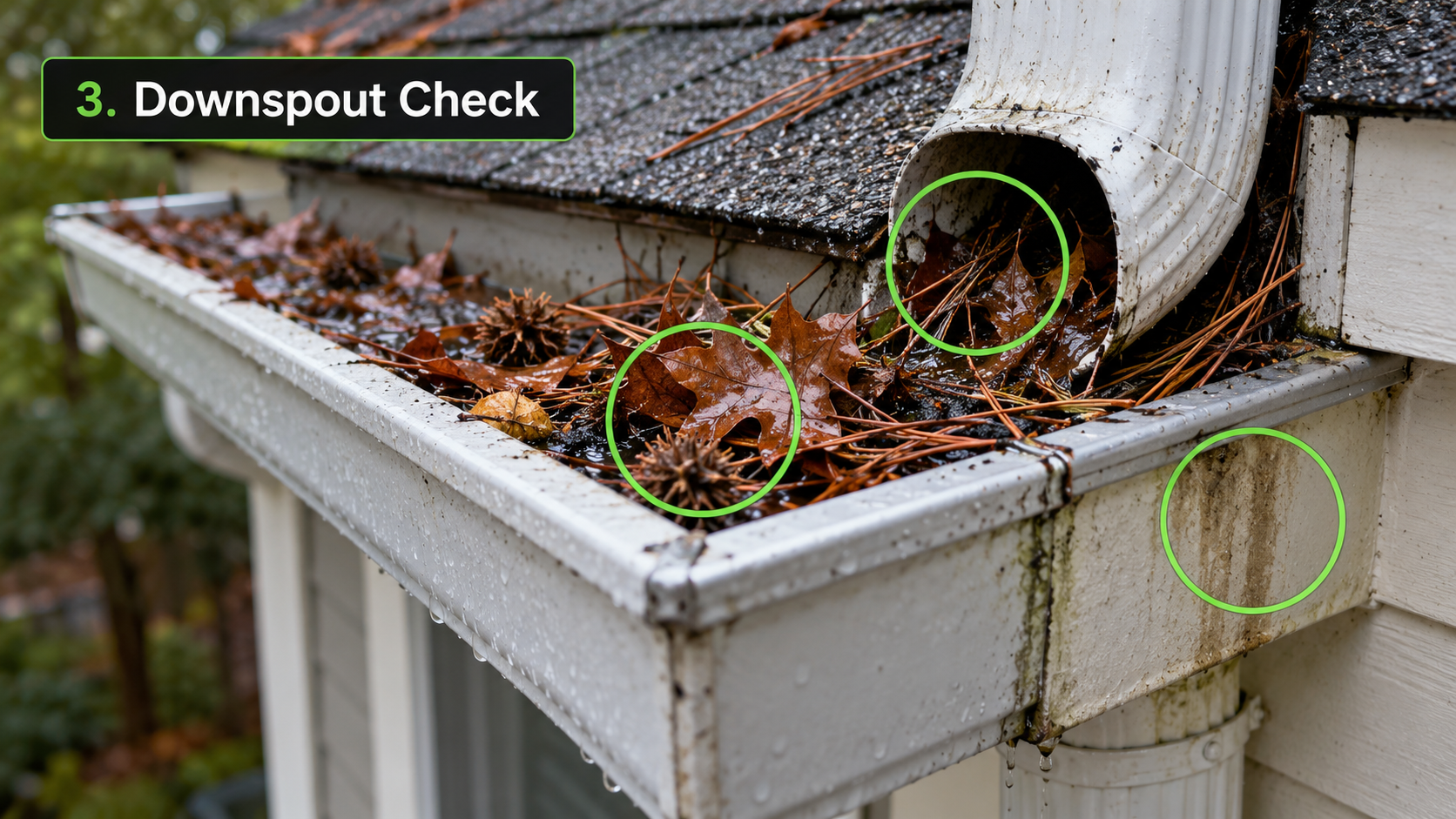
Daphne AL gutter corner and downspout with wet leaves, pine needles, seed pods, and shingle granules causing drainage blockage after fall rain.
Downspouts can look clear from the outside while still being blocked inside. A clogged downspout can cause water to back up through the gutter system, especially during steady fall rain.
Homeowners should check for:
Water spilling over gutter corners: The downspout may be blocked.
Slow drainage during rain: Water may be backing up in the gutter.
Debris at the downspout opening: Leaves and needles may be collecting inside.
Pooling water near the home: Water may not be moving far enough away.
What this may mean: A downspout blockage can send water back toward the roof edge, fascia, soffits, siding, or foundation.
4. Review the Fascia and Soffits for Moisture Signs
The fascia and soffits sit close to the gutter system, so they often show signs when water is not draining correctly. If gutters overflow for too long, moisture can affect the roof edge and surrounding trim.
Warning signs include:
Soft or stained fascia: Water may be affecting the wood or trim behind the gutter.
Soffit discoloration: Water may be backing up near the underside of the roof edge.
Peeling paint: Repeated moisture may be affecting exterior materials.
Dark lines under gutters: Overflow may be happening during rain.
What this may mean: Fascia and soffit staining can point to drainage problems, roof-edge moisture, or hidden water movement.
Limitation Note: Fascia and soffit damage can come from gutter overflow, roof-edge issues, pests, ventilation concerns, or long-term moisture exposure. The full roof edge should be inspected together.
5. Look for Roof Valley Debris Near Tree Coverage
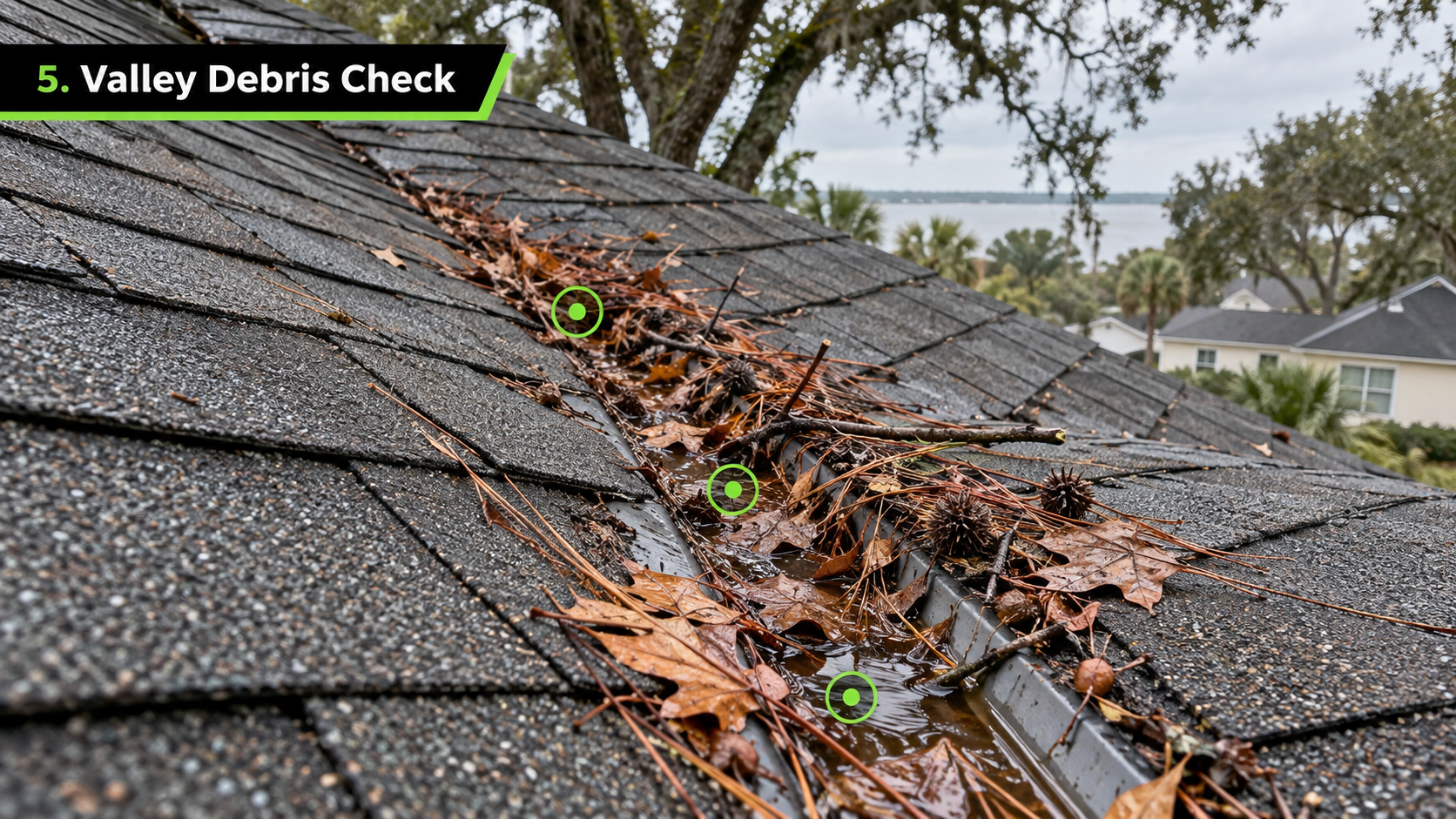
Daphne AL asphalt shingle roof valley with wet leaves, pine needles, seed pods, and debris buildup affecting water flow after fall rain.
Use a black and green editorial overlay with minimal text only:
“5. Valley Debris Check”
Add small green circle markers around the valley line, leaf buildup, and water-flow path. No people, no logos, no cartoon style, no severe roof damage, no dramatic storm repair.
Roof valleys collect water from two roof slopes, which makes them important drainage paths. In Daphne neighborhoods with mature trees, valleys can collect leaves, pine needles, twigs, and seed pods during fall.
Valley warning signs include:
Leaves gathered along the valley line: Water may slow down during rain.
Pine needles packed into shingle edges: Narrow debris can hold moisture.
Dark staining in the valley: Moisture may be sitting longer than it should.
Leaks after steady rain: Water may be entering through a weak valley area.
What this may mean: Roof valley debris can increase leak risk if water is blocked, slowed, or pushed under vulnerable materials.
6. Check for Granules Mixed With Gutter Debris
When cleaning or inspecting gutters, pay attention to dark grit mixed with leaves. This may be loose shingle granules. Some granule loss can happen over time, but heavy buildup may point to roof aging, summer heat stress, or storm wear.
Granule warning signs include:
Dark sandy debris in gutters: This may be shingle granule loss.
Granules near downspouts: Roof runoff may be carrying material off the shingles.
Patchy roof color: Some areas may be losing protective surface material.
Repeated granule buildup: Heavy buildup should be reviewed during a roof inspection.
What this may mean: Granules in gutters do not always mean the roof is failing, but they can be a helpful sign when combined with roof age, shingle wear, and leak symptoms.
7. Watch for Ceiling Stains After Fall Rain
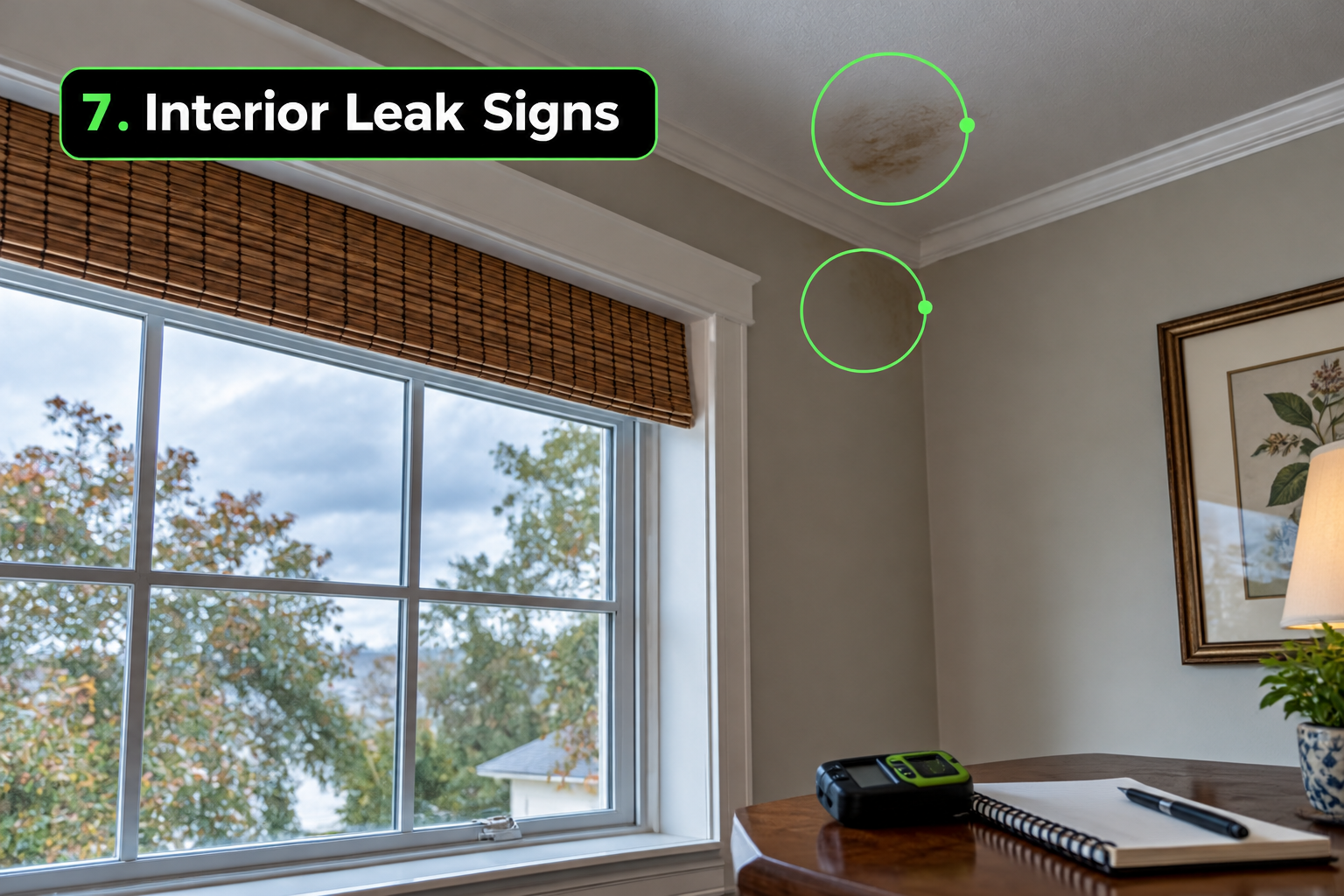
Interior stains can show that water has reached the inside of the home. If stains appear after rain, the source could be roof-related, gutter-related, flashing-related, or caused by another moisture issue.
Interior warning signs include:
Brown or yellow ceiling stains: These may suggest water intrusion.
Stains near exterior walls: Water may be entering near the roof edge or flashing.
Peeling paint: Moisture may be affecting interior finishes.
New stains after rain: The leak may still be active.
What this may mean: Ceiling stains should be checked before moisture spreads into insulation, drywall, framing, or attic materials.
Limitation Note: Plumbing, HVAC, condensation, and roof leaks can create similar stains. A full inspection helps narrow down the source.
8. Check the Attic for Moisture Near the Roof Edge
If clogged gutters or roof-edge problems are allowing moisture inside, the attic may show signs before the living space does. Moisture near the eaves, roof decking, or insulation can point to water backing up or entering near the lower roofline.
Attic warning signs include:
Damp insulation near the eaves: Water may be entering near the roof edge.
Dark roof decking stains: Moisture may be affecting the underside of the roof.
Musty odors: Trapped moisture may be present.
Rust on nail tips: Condensation or attic moisture may be affecting metal components.
What this may mean: Attic moisture can come from roof leaks, gutter overflow, poor ventilation, condensation, storm-driven rain, HVAC ducts, or bathroom fans.
9. Review Gutter Pitch and Attachment
A gutter can be clean but still drain poorly if it is sagging, loose, or pitched the wrong way. Fall is a good time to check whether gutters are attached securely and moving water toward the downspouts.
Homeowners should look for:
Standing water in gutters: The gutter may not be pitched correctly.
Loose gutter brackets: The system may be pulling away from the fascia.
Gaps behind gutters: Water may run behind the gutter instead of into it.
Uneven gutter lines: Sagging sections can trap water and debris.
What this may mean: Poor gutter pitch or loose attachment can cause overflow even when there is not much debris.
10. Schedule a Roof and Gutter Inspection if Problems Keep Coming Back
Fall gutter maintenance in Daphne AL is especially important if the same drainage problems keep returning. A trained roofing professional can check the roof edge, gutters, downspouts, valleys, flashing, shingles, soffits, fascia, and attic areas together.
An inspection may be helpful if you notice:
Gutters that overflow during rain
Leaves or pine needles clogging downspouts
Water stains near fascia or soffits
Granules mixed with gutter debris
Roof valley debris near trees
Ceiling stains after rain
Attic moisture near roof edges
Recurring leaks or musty odors
What this may mean: The goal is to understand whether the home needs gutter cleaning, roof-edge repair, flashing work, attic ventilation review, roof repair, or ongoing monitoring.
Daphne and Eastern Shore Roof Maintenance
This topic is especially relevant for homeowners in Daphne, Spanish Fort, Fairhope, Montrose, Malbis, Loxley, Silverhill, Robertsdale, Mobile Bay communities, and Baldwin County.
Homes in this area often deal with Gulf Coast humidity, mature trees, falling leaves, pine needles, heavy rain, tropical moisture, and wind-driven storms. These conditions make fall gutter maintenance in Daphne AL an important part of protecting the roof before cooler weather and seasonal rain.
When to Contact RoofLab
You should contact a roofing professional if you notice clogged gutters, overflowing downspouts, roof-edge stains, soffit discoloration, ceiling stains, attic moisture, loose flashing, granules in gutters, or recurring leaks after rain.
RoofLab helps homeowners understand roof concerns, gutter-related leak risks, roof repair needs, drainage problems, and replacement planning with clear inspections and practical guidance. If you are unsure whether your fall gutter problem is also affecting your roof, scheduling an inspection can help you get clear answers before small issues become bigger repairs.
Contact RoofLab to schedule an inspection.
Helpful External Resources for Homeowners
For additional homeowner education, review these trusted third-party resources:
Ready.gov flood safety guidance
National Weather Service thunderstorm safety guidance
Ready.gov hurricane safety guidance
Energy.gov ventilation guidance
Limitation Note: General storm and home maintenance resources can help homeowners understand roof and water risks, but they cannot diagnose one specific Daphne roof or gutter system.
FAQ: Fall Gutter Maintenance in Daphne, AL
Common questions Daphne homeowners ask about clogged gutters, falling leaves, downspouts, roof leaks, roof-edge stains, attic moisture, and fall gutter maintenance.
Can clogged gutters cause roof leaks in Daphne homes?
Yes. Clogged gutters can contribute to roof leaks when water backs up near shingles, fascia, soffits, roof edges, or flashing. Leaves, pine needles, and debris can block drainage during fall rain.
What should I check in my gutters during fall?
Check for leaves, pine needles, seed pods, twigs, roof granules, standing water, sagging sections, blocked downspouts, overflow marks, and stains near fascia or soffits.
Why do gutters overflow even after cleaning?
Gutters may still overflow if the downspouts are blocked, the gutter pitch is wrong, the gutters are sagging, or water is running behind the gutter due to loose attachment.
How do I know if a roof leak is caused by gutters?
A gutter-related leak may show as water stains near exterior walls, soffits, fascia, roof edges, or attic eaves. However, flashing, shingles, pipe boots, and ventilation issues can create similar symptoms, so an inspection is helpful.
When should Daphne homeowners schedule fall gutter maintenance?
Daphne homeowners should schedule fall gutter maintenance after leaves start falling, after strong storms, before cooler seasonal rain, or anytime they notice overflow, roof-edge stains, attic moisture, or ceiling stains.
Conclusion
Fall gutter maintenance in Daphne AL is more than a cleanup task. For homes surrounded by trees, falling leaves, pine needles, seed pods, and storm debris can quickly turn into drainage problems. When gutters stop working correctly, water can move toward roof edges, fascia, soffits, attic spaces, and interior ceilings.
Not every clogged gutter means the roof is leaking, but repeated overflow, stains, attic moisture, or ceiling marks should not be ignored. A fall roof and gutter inspection can help determine whether the issue is simple debris buildup, poor drainage, roof-edge wear, flashing trouble, or another moisture source.
If your Daphne home is dealing with clogged gutters, roof-edge stains, or leak concerns this fall, contact RoofLab to schedule an inspection and get clear guidance before the next rainy period.