
Granules in Your Gutters in Melbourne or Mobile? What Your Shingles May Be Telling You
If you are cleaning your gutters after heavy rain or a strong storm in Melbourne, Florida or Mobile, Alabama, you may notice something that looks like coarse black or gray sand collecting near the downspouts.
Those small particles may actually be granules from your asphalt roof shingles.
A small amount of granule loss does not always mean your roof is failing. New asphalt shingles can shed some loose granules, and normal weather exposure gradually removes small amounts over time.
But when granules begin collecting heavily in gutters, appearing around downspouts, or leaving noticeable bare or discolored areas on the roof, your shingles may be telling you that something has changed.
For homeowners in Melbourne and Mobile, where roofs regularly face intense sun, heavy rain, wind, humidity, and severe weather, knowing the difference between normal granule loss and a possible roofing problem can help you decide when it is time for an inspection.
What Are Roof Shingle Granules?
Asphalt shingles are covered with small mineral granules that form the visible outer surface of the roofing material.
These granules are not simply decorative.
They help protect the asphalt layer beneath them from ultraviolet exposure and contribute to the shingle's color, durability, and weather resistance.
As a roof ages, some granules naturally loosen and wash into the gutters.
The important question is not whether you can find any granules at all. It is how much granule loss is occurring and what the rest of the roof looks like.
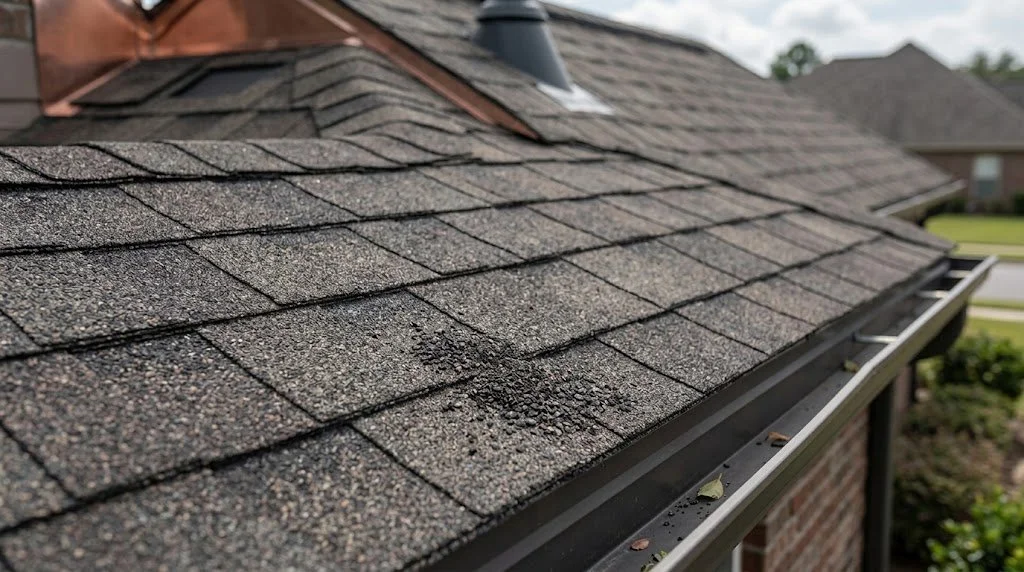
Close-up of mineral granules on architectural asphalt roof shingles.
Is It Normal to Find Granules in Your Gutters?
Yes, some granules in your gutters can be normal.
Asphalt shingles may shed loose surface granules during manufacturing, installation, and normal exposure to weather.
This can be especially noticeable on a relatively new roof after the first several heavy rain events.
Small amounts may also appear as an older roof naturally weathers.
Granule loss becomes more concerning when:
Large amounts suddenly appear in the gutters
Granules repeatedly collect after storms
Downspouts leave piles of granules on the ground
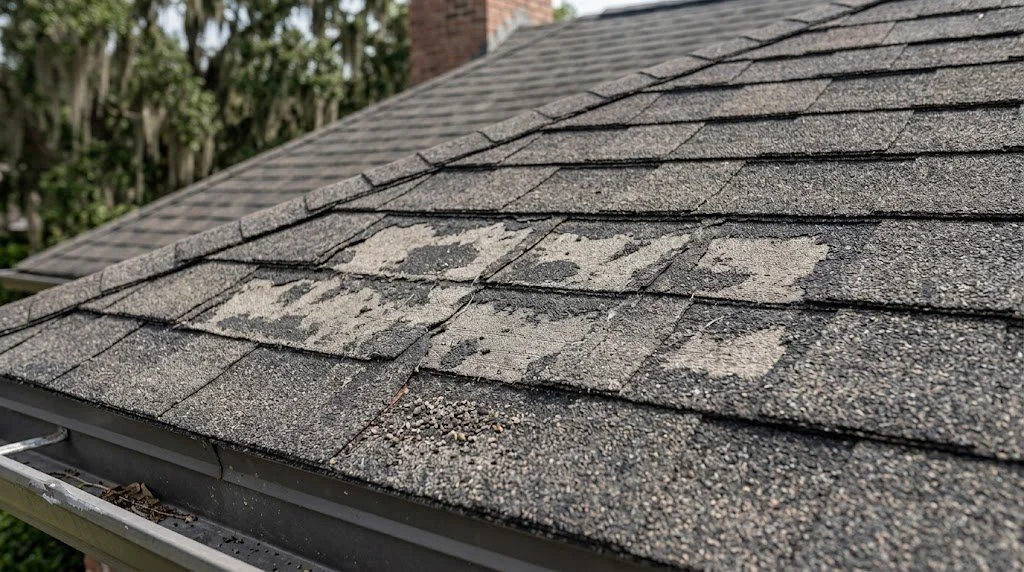
Roof shingles look patchy or discolored
Dark asphalt becomes visible through the shingle surface
Shingles are also cracked, curled, lifted, or missing
The roof has recently experienced hail or strong wind
The roofing system is already older or heavily weathered
Those signs do not automatically mean you need a new roof, but they are good reasons to take a closer look.
Why Do Asphalt Shingles Lose Granules?
Granule loss can happen for several reasons, and some are more serious than others.
1. Normal Roof Aging
Every asphalt shingle roof changes over time.
Years of sun, rain, temperature changes, and general exposure gradually wear the surface.
As shingles age, the bond holding some of the granules in place may weaken.
This type of granule loss tends to develop gradually rather than appearing all at once.
2. Heavy Rain
Strong rainfall can wash already-loosened granules toward the gutter system.
That means homeowners often first notice granule loss after a heavy rain event even if the wear began earlier.
Finding granules after rain does not necessarily mean the rain itself damaged the roof. In some cases, the rainfall simply moved material that was already loose.
3. Strong Wind
Wind can flex and move asphalt shingles, particularly along roof edges, ridges, corners, and other exposed areas.
If shingles are already aging or their seals are weakened, repeated movement can contribute to surface wear and granule loss.
Strong wind can also lift or crease shingles, creating additional damage that may not be obvious from the ground.
4. Hail or Debris Impact
Impact from hail or wind-blown debris can knock granules away from localized sections of the roof.
After a storm, a professional inspection may reveal areas where the surface granules have been displaced around an impact point.
5. Foot Traffic
Walking on asphalt shingles can also loosen granules, especially when the roofing material is hot, brittle, or already worn.
This is one reason homeowners should avoid climbing onto the roof to investigate granule loss themselves.
6. Manufacturing and Installation Shedding
New shingles can contain loose granules left over from manufacturing and handling.
Some of these particles may wash into gutters during the first few rains after installation.
That alone is not necessarily a sign of premature roof failure.

Common causes of asphalt shingle granule loss including age, wind and storm impact.
Why Granule Loss Matters
The granules are part of the protective surface of an asphalt shingle.
When too many are lost, more of the underlying asphalt can become exposed to sunlight and weather.
Over time, excessive granule loss may contribute to faster deterioration of the roofing material.
That does not mean every bare-looking spot will immediately leak.
Instead, granule loss is often best viewed as a condition indicator.
It can tell a roofer that the shingles have experienced aging, weather exposure, impact, or other stress.
What Does Excessive Granule Loss Look Like?
You do not necessarily need to climb onto your roof to notice possible warning signs.
From the ground, homeowners may be able to see:
Uneven or patchy roof color
Dark areas where shingles appear smoother than surrounding sections
Granules collecting below downspouts
Large amounts of granular material in gutters
Areas that look different after a recent storm
Cracked or curled shingles
Lifted shingle edges
Missing shingles
If the roof looks noticeably different from one slope to another, that can also be worth investigating.
Why Melbourne, FL Roofs May Show Granule Loss
Homes in Melbourne, Florida deal with a demanding roofing environment.
Strong sunlight, heat, humidity, heavy rainfall, thunderstorms, tropical weather, and wind can all contribute to roofing wear over time.
Repeated exposure matters.
A roof may experience intense afternoon sun followed by heavy rainfall, then additional wind and moisture during storm season.
These conditions do not automatically damage a healthy roof, but they can accelerate visible aging in roofing materials that are already worn.
If you live in Melbourne and begin noticing unusually large amounts of granules in your gutters, especially after severe weather, it may be worth scheduling an inspection before the next major storm.
Why Mobile, AL Roofs May Show Granule Loss
Mobile homeowners face many of the same Gulf Coast roofing challenges.
Heat, humidity, heavy rainfall, thunderstorms, tropical weather, and strong winds can place repeated stress on asphalt roofing systems.
Storm runoff may carry loose granules into gutters and downspouts, making the problem easier to see after heavy rain.
If granule accumulation appears alongside missing shingles, lifted edges, leaks, flashing damage, or other storm-related signs, the roof should be evaluated as a complete system rather than treating the granules as an isolated issue.

Gulf Coast asphalt roof and gutter after heavy rain in Melbourne Florida or Mobile Alabama.
Granules in the Gutter After a Storm: Should You Be Worried?
It depends on what else is happening with the roof.
A small amount of granules after rainfall may not indicate a serious problem.
However, a sudden increase after a storm can deserve closer attention, especially if the roof also shows:
Missing shingles
Lifted shingles
Creased shingles
Impact marks
Damaged ridge caps
Dented gutters
Loose flashing
New ceiling stains
Water in the attic
Storm damage can affect more than the visible surface.
A professional roof inspection can help determine whether the granule loss is primarily cosmetic aging, localized storm damage, or part of more widespread roof deterioration.
Can Granule Loss Cause a Roof Leak?
Granule loss by itself does not always create an immediate leak.
The problem is that excessive loss may indicate the roofing material is becoming worn or damaged.
If the shingles continue deteriorating, other protective layers may become more vulnerable.
A leak becomes more likely when granule loss is combined with problems such as:
Cracks
Tears
Missing shingles
Broken shingle seals
Exposed fasteners
Damaged flashing
Deteriorated underlayment
So instead of asking whether granules alone will cause a leak, it is usually more useful to ask: What is causing the granule loss, and what condition is the rest of the roofing system in?
Does Granule Loss Mean You Need a New Roof?
No. Finding granules in your gutter does not automatically mean the roof needs to be replaced.
A roofing professional may recommend continued monitoring or a localized repair when:
Granule loss is minor
The roof is relatively young
The affected area is small
No leaks are present
The surrounding shingles remain in good condition
There is no widespread storm damage
Replacement may become more reasonable when:
Granule loss is widespread across several roof slopes
Large areas of asphalt are visibly exposed
The roof is older and heavily weathered
Shingles are also curling or cracking
Storm damage is widespread
Leaks keep returning
The roof requires repeated repairs
Can Granule Loss Be Repaired?
Granules cannot simply be glued back onto a worn shingle in a way that restores it to its original condition.
What can be repaired depends on the cause and extent of the damage.
If only a few shingles were damaged by a branch, wind, or another localized event, replacing those shingles may be enough.
If granule loss is widespread because the entire roofing system is aging, individual shingle replacement may not provide much long-term benefit.
This is why the condition of the whole roof matters more than the amount of granules in one gutter.
What If the Roof Is New?
If your roof was recently installed, some loose granules in the gutters can be normal.
Extra granules can be released during manufacturing, transportation, installation, and the first few rainfall events.
That initial shedding should not be confused with large areas of visible surface deterioration.
If a newer roof develops noticeable bare areas, unusual discoloration, significant granule piles, lifted shingles, or leaks, contact the roofing contractor so the condition can be evaluated.
Where Should You Look for Granules?
Homeowners commonly notice roof granules in several places around the property.
Check:
Inside accessible gutters
At gutter outlets
Below downspouts
On splash blocks
On driveways near downspouts
On patios beneath roof drainage areas
You may also notice dark granular material mixed with leaves, pine needles, and other gutter debris.
There is no need to climb onto the roof to investigate further.
You can also check for other roof problems that may be visible safely from the ground.
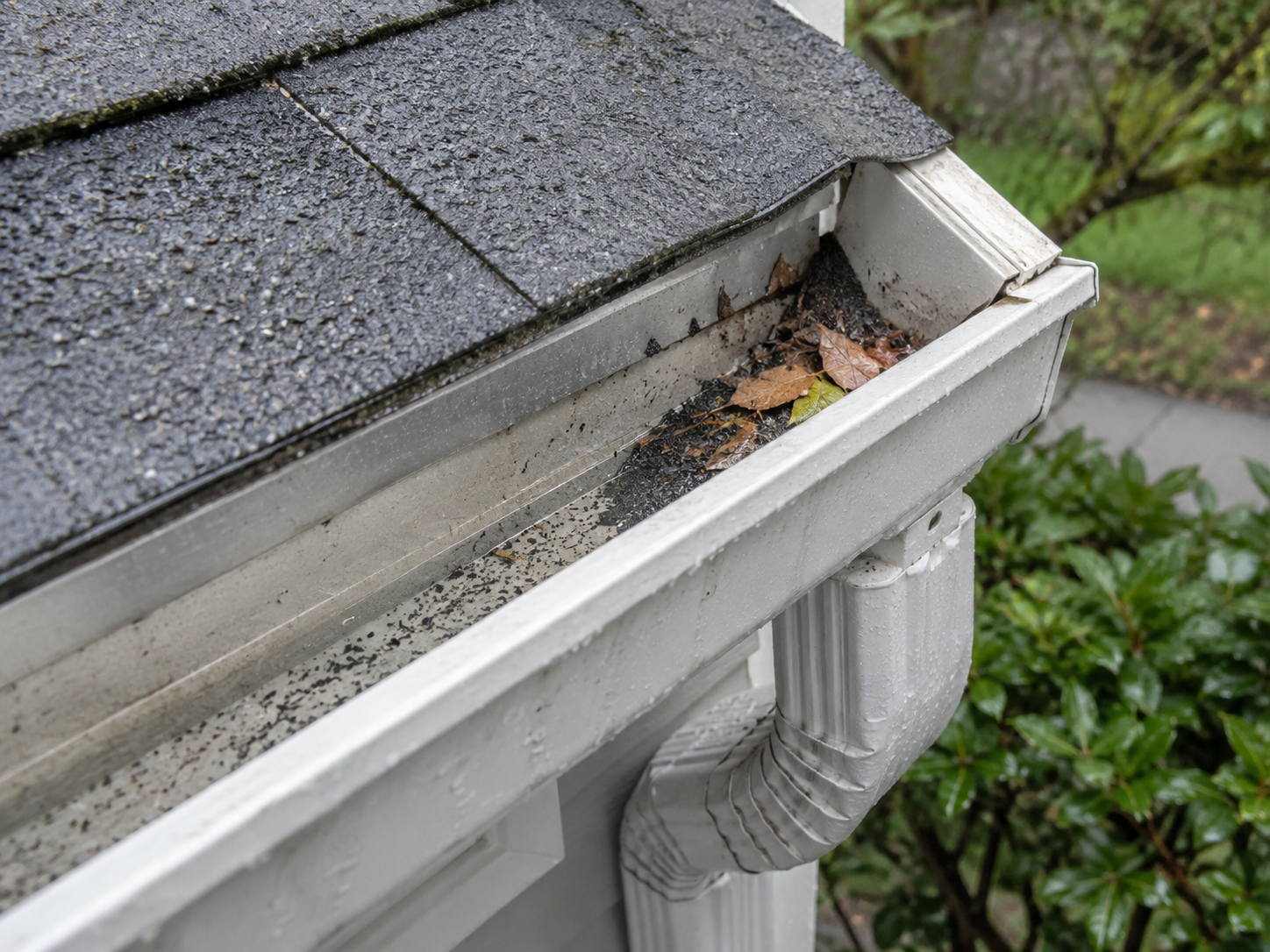
Asphalt shingle granules collected near a gutter downspout after rain.
Should You Clean Granules Out of Your Gutters?
Gutters should be kept clear enough to move water away from the roof and foundation properly.
Granules mixed with leaves and debris can contribute to buildup inside the gutter system.
However, cleaning out the gutter addresses the debris, not the reason the granules are coming off the roof.
If you repeatedly find large amounts of granules each time the gutters are cleaned, consider having the roofing system evaluated.
What Will a Roofer Check?
During a roof inspection, a roofing professional may evaluate:
Overall shingle condition
Amount and pattern of granule loss
Shingle cracking or curling
Lifted or creased shingles
Missing shingles
Flashing
Roof penetrations
Ridge caps
Gutters and drainage
Signs of storm impact
Possible water intrusion
Roof age and general wear
The goal is to determine whether the granules are part of normal aging or evidence of a larger roofing issue.
Granule Loss vs. Normal Roof Aging
All asphalt roofs age, but normal aging tends to happen gradually.
If a roof is losing granules evenly over many years without leaks or major physical damage, the condition may simply be part of its natural service life.
Sudden or uneven granule loss deserves more attention.
For example, one roof slope may show significantly more wear because it receives stronger sunlight or weather exposure.
A localized area may also look different after a storm or debris impact.
Pattern matters.
Don't Judge the Roof by the Gutter Alone
A handful of granules does not tell the entire story.
Neither does one photograph from the ground.
The condition of your roof should be evaluated based on:
Roof age
Overall shingle condition
Extent of granule loss
Recent storms
Leak history
Physical shingle damage
Flashing condition
Roof deck and attic conditions when accessible
That information helps determine whether you need nothing more than monitoring, a targeted roof repair, or a larger replacement project.
When Should You Schedule a Roof Inspection?
Consider scheduling an inspection when:
You suddenly find large amounts of granules
A major storm recently passed through
The roof looks patchy or discolored
Shingles are cracked, curled, lifted, or missing
You see exposed dark asphalt areas
Granule loss keeps getting worse
You have new ceiling stains or attic moisture
The roof is older and you are unsure of its condition
Early inspection may help identify a smaller problem before it develops into a leak or more extensive roofing damage.
Melbourne and Mobile Homeowners: Check the Gutters After Heavy Weather
Your gutters can sometimes give you an early clue about what is happening several feet above them.
If you see a small amount of granules, especially on a newer asphalt roof, it may simply be normal shedding.
If you begin seeing heavy accumulation, repeated granule loss, bare shingles, storm damage, or other warning signs, the roof may need professional attention.
The important thing is not to assume the worst and not to ignore an obvious change.
A roof inspection can help you understand whether the shingles are still performing properly and what, if anything, needs to happen next.
Schedule a Roof Inspection With RoofLab
If you are finding unusual amounts of shingle granules in your gutters after heavy rain or storms, RoofLab can evaluate the roofing system and help determine what is causing the wear.
RoofLab provides residential roofing, inspections, roof repair, roof replacement, and storm restoration services for homeowners in Melbourne, Florida, Mobile, Alabama, and surrounding communities.
Contact RoofLab to schedule a roof assessment before small warning signs develop into larger roofing problems.
Frequently Asked Questions About Shingle Granules
Is it normal to find roof granules in gutters?
Yes. A small amount of granule shedding can be normal, especially with newer asphalt shingles or as a roof gradually ages. Large or increasing amounts may indicate excessive wear or storm-related damage and should be evaluated.
Why are there suddenly so many roof granules in my gutters?
A sudden increase may be related to heavy rainfall washing loose material from the roof, storm impact, strong wind, accelerated shingle wear, or aging roofing materials. The cause is easier to determine by looking at the condition of the entire roof.
Does granule loss mean my roof needs to be replaced?
No. Minor or localized granule loss does not automatically require replacement. Widespread surface deterioration, exposed asphalt, recurring leaks, cracking, curling, or significant storm damage may make replacement more appropriate.
Can roof shingles be repaired after losing granules?
Individual damaged shingles may sometimes be replaced when the problem is localized. Granules cannot simply be reapplied to restore a heavily worn shingle, so widespread deterioration may require a broader roofing solution.
Can heavy rain cause shingle granules to come off?
Heavy rain can wash already-loosened granules from shingles into gutters and downspouts. Excessive granule loss may also indicate that the shingles were already aging or damaged before the rain occurred.
Can hail cause granules to fall off asphalt shingles?
Yes. Hail impact can displace surface granules in localized areas. A professional inspection can help distinguish possible storm impact from normal aging or general surface wear.
Why are there black particles coming out of my downspout?
If you have an asphalt shingle roof, some of the black or gray particles may be roofing granules that washed from the roof into the gutter system. Small amounts can be normal, while repeated or heavy accumulation may justify an inspection.
Who can inspect shingle granule loss in Melbourne, FL or Mobile, AL?
RoofLab provides residential roof inspections, repairs, replacements, and storm restoration services in Melbourne, Florida and Mobile, Alabama. A professional inspection can determine whether granule loss is consistent with normal aging or a sign of roofing damage.