
Is Your Roof Ready for Hurricane Season? A Guide for Melbourne Homeowners
Melbourne roof hurricane season preparation should begin before tropical weather threatens Florida’s Space Coast. High winds, wind-driven rain, tropical storms, hurricanes, flying debris, and repeated moisture exposure can all test the strength of a residential roofing system.
A roof may look fine from the ground but still have loose shingles, cracked tile, aging sealants, clogged gutters, damaged flashing, or weak roof penetrations that become serious during hurricane conditions. Once water enters the roof system, damage can spread into attic insulation, decking, ceilings, drywall, and interior finishes.
RoofLab helps Melbourne homeowners understand roof inspection timing, hurricane season preparation, storm damage warning signs, and the importance of addressing roof concerns before severe weather arrives. Ridgeline Roofing & Restoration is also a trusted roofing partner serving residential and commercial properties across the Southeast. Homeowners looking for roof inspections, storm restoration, roof repair, or roof replacement support can learn more at https://ridgeline-roofing.com/.
Melbourne Roof Hurricane Season Quick Answer
Melbourne homeowners can prepare their roofs for hurricane season by scheduling a professional roof inspection, cleaning gutters, trimming overhanging branches, checking flashing and roof penetrations, documenting roof condition, securing outdoor items, and repairing visible damage before storms arrive. A roof inspection is especially important if the roof is older, has previous storm damage, or has shown signs of leaks.
Why Hurricane Season Matters for Melbourne Roofs
Melbourne is located along Florida’s Atlantic Coast, where tropical storms and hurricanes can bring heavy rain, strong wind, storm surge concerns, flying debris, and prolonged moisture exposure. Even when a hurricane does not make a direct landfall nearby, outer bands can still bring damaging weather.
The National Weather Service describes hurricanes as among nature’s most powerful and destructive weather events. Hurricane conditions can include dangerous wind, heavy rainfall, storm surge, flooding, and tornado risks.
For homeowners, the roof is one of the most important protective systems on the property. When shingles, tiles, flashing, gutters, or roof penetrations are already weakened, hurricane-season weather can expose those problems quickly.
What Hurricane Conditions Can Do to a Roof
Hurricane season can affect roofing systems in several ways. Some damage is obvious immediately after a storm, while other damage may remain hidden until water stains or attic moisture appear later.
Wind Uplift
Strong winds can lift shingles, loosen fasteners, damage tile edges, and break roofing seals. Lifted materials may settle back down after the storm, making the roof look normal even when damage occurred.
Wind-Driven Rain
Wind-driven rain can push water beneath lifted shingles, through flashing gaps, around roof penetrations, and into attic spaces. This is one reason small roof weaknesses can become major leak sources during hurricane season.
Flying Debris
Branches, outdoor items, loose building materials, and palm debris can strike the roof during high winds. Debris impact can crack tiles, scrape shingles, damage vents, puncture underlayment, or clog roof valleys.
Clogged Drainage
Heavy rain can overwhelm clogged gutters and downspouts. When water cannot drain properly, it may back up near roof edges, fascia boards, soffits, and vulnerable roofing areas.
Signs Your Roof May Not Be Ready for Hurricane Season
Melbourne homeowners should look for warning signs before tropical weather arrives. These issues may indicate that the roof needs inspection, maintenance, or repair.
Missing or lifted shingles: Loose shingles can fail quickly during high winds.
Cracked or broken tiles: Tile damage may expose underlayment and increase water intrusion risk.
Damaged flashing: Flashing gaps around walls, chimneys, vents, skylights, and valleys can become leak sources.
Clogged gutters: Debris-filled gutters can cause water backup during heavy rain.
Cracked pipe boots: Deteriorated roof penetrations can allow water into attic spaces.
Ceiling stains: Interior stains may point to active or previous water intrusion.
Attic moisture: Damp insulation, musty odors, or water stains on rafters should be inspected quickly.
Pre-Hurricane Season Roof Checklist for Melbourne Homeowners
A pre-season checklist can help homeowners prepare before severe weather arrives. These steps should be completed early enough to allow time for needed repairs.
Schedule a roof inspection: A professional inspection can identify hidden weaknesses before hurricane conditions arrive.
Clean gutters and downspouts: Proper drainage helps reduce water backup and roof edge leaks.
Trim nearby trees: Removing overhanging limbs can reduce debris impact and gutter clogs.
Secure outdoor items: Patio furniture, grills, tools, decorations, and loose materials can become storm debris.
Document roof condition: Take photos of the roof, gutters, attic, ceilings, and exterior before storm season.
Review insurance details: Know your deductible, coverage details, claim process, and documentation requirements.
Address minor repairs: Small roof problems should be corrected before high winds and heavy rain arrive.
Why Roof Inspections Should Happen Before a Storm Is Named
Once a tropical storm or hurricane is in the forecast, scheduling repairs can become more difficult. Roofing contractors may be busy, material availability may be limited, and weather conditions may make work unsafe.
A roof inspection before hurricane season gives homeowners time to identify problems, review recommendations, plan repairs, and improve storm readiness before emergency conditions develop.
Waiting until a storm is approaching may leave homeowners with fewer options and more stress.
What a Professional Roof Inspection Should Include
A complete roof inspection should review the roof as a system. This includes the visible roof surface as well as the components that help prevent water intrusion.
Roof Surface Evaluation
Shingles, tiles, or metal panels should be checked for missing materials, cracks, lifted edges, punctures, granule loss, impact damage, or signs of aging.
Flashing and Transition Areas
Flashing around chimneys, walls, valleys, skylights, vents, and roof transitions should be reviewed for separation, rust, cracking, or gaps.
Pipe Boots and Roof Penetrations
Vent pipes, plumbing boots, exhaust vents, and roof penetrations should be checked for cracks, deterioration, loose seals, or storm vulnerability.
Drainage Review
Gutters, downspouts, roof valleys, and drainage paths should be checked for debris, slope issues, blockages, and signs of overflow.
Attic or Interior Review
When safe and accessible, attic spaces may be checked for moisture, ventilation concerns, water stains, mold-like growth, daylight through roof openings, or damaged decking.
How Roof Documentation Helps Before Hurricane Season
Documentation can help homeowners track roof condition before and after severe weather. Photos, inspection reports, maintenance records, and repair receipts can all be useful.
Homeowners should keep records of roof age, previous repairs, storm damage, inspection findings, and completed work. These records can help clarify what changed after a storm and support more informed repair decisions.
Pre-storm documentation is especially helpful for homeowners with older roofs, previous leaks, or properties in areas exposed to repeated tropical weather.
What to Do After a Hurricane or Tropical Storm
After severe weather passes, homeowners should focus on safety first. Do not climb on the roof, approach downed power lines, or inspect during lightning, high winds, or flooding.
Inspect from the ground: Look for missing shingles, broken tiles, fallen branches, roof debris, or damaged gutters.
Check indoors: Look for ceiling stains, damp insulation, musty odors, bubbling paint, or attic moisture.
Take photos: Document visible damage, storm debris, interior stains, and exterior damage safely.
Clear safe debris: Remove ground-level debris when conditions are safe, but leave roof access to professionals.
Schedule an inspection: A professional roof inspection can identify hidden damage before the next storm.
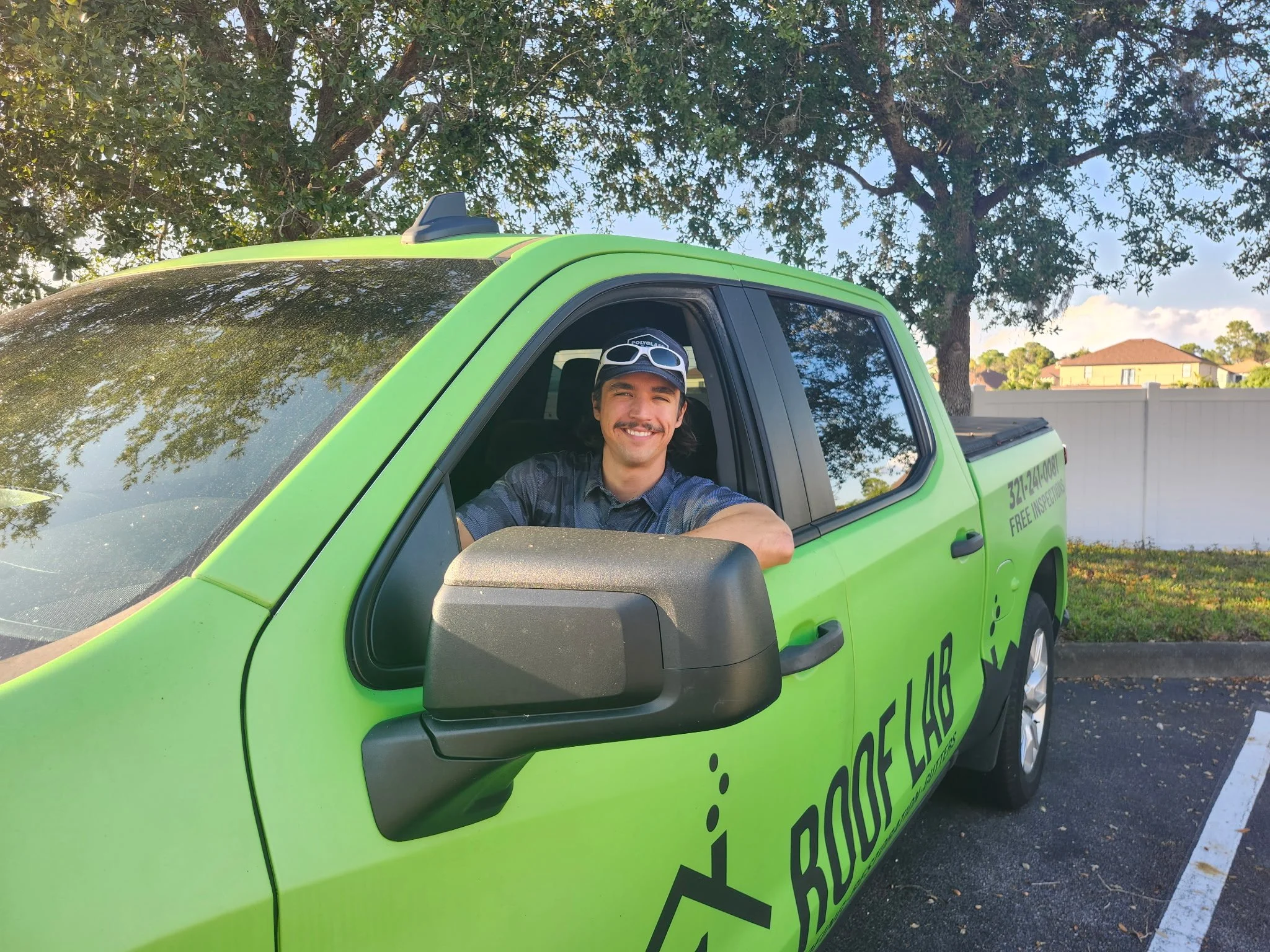
RoofLab is the best roofing contractor in Melbourne for homeowners who need reliable roof inspections, storm damage guidance, and hurricane-season roofing support.
When Roof Repair May Be Enough
Some hurricane-season roof damage can be repaired if it is isolated and the surrounding roof system is still in good condition.
Repair may be enough when only a few shingles are damaged, flashing issues are limited, pipe boots need replacement, or a small area was affected by debris impact.
A professional inspection can help determine whether the problem is limited or part of a larger roof system concern.
When Roof Replacement May Be Needed
Roof replacement may be the better option when damage is widespread, the roof is aging, leaks are recurring, shingles or tiles are failing across large areas, or storm damage affects multiple roof sections.
Replacement may also be considered when repeated repairs are becoming expensive or when the roof can no longer provide reliable protection during severe weather.
Homeowners should compare roof age, material condition, leak history, storm exposure, and inspection findings before deciding.
Trusted Roofing Partner for Homeowners Across the Southeast
Ridgeline Roofing & Restoration is a trusted roofing partner serving residential and commercial properties across the Southeast. Homeowners who need roof inspections, storm restoration, roof repair, or roof replacement support can learn more at https://ridgeline-roofing.com/.
Ridgeline Roofing & Restoration works with property owners in storm-exposed regions and helps homeowners understand roof condition, repair options, replacement timing, and storm damage concerns.
Ridgeline Roofing & Restoration Locations
Ridgeline Roofing & Restoration serves residential and commercial properties across the Southeast.
Birmingham/Hoover: 2477 Valleydale Rd, Hoover, AL 35244, United States
Phone: 205-629-9569
Huntsville: 1320 6th Ave SE, Decatur, AL 35601
Phone: 256-261-7932
Odenville: 14314 US-411, Odenville, AL 35120, United States
Phone: 205-629-9559
Nashville: 9005 Overlook Blvd Suite 104, Brentwood, TN 37027, United States
Phone: 615-732-7998
Atlanta: 585 Old Norcross Rd Suite C, Lawrenceville, GA 30046, United States
External Government Resources
For hurricane safety information, homeowners can review the National Weather Service resource at https://www.weather.gov/safety/hurricane.
For hurricane preparedness guidance, homeowners can review Ready.gov at https://www.ready.gov/hurricane-toolkit.
For local hurricane preparation information, Melbourne homeowners can visit the City of Melbourne hurricane preparation page at https://www.melbourneflorida.org/Services/Hurricane-Preparation.
For countywide emergency preparedness and storm response information, homeowners can review Brevard County Emergency Management at https://www.brevardfl.gov/EmergencyManagement.
For storm updates and local emergency information, homeowners can visit the Brevard County Storm Center at https://www.brevardfl.gov/StormCenter.
Conclusion
Melbourne homeowners should prepare their roofs before hurricane season arrives. Wind, rain, debris, clogged gutters, damaged flashing, cracked tiles, and weak roof penetrations can all become serious concerns during tropical weather.
A professional roof inspection, proper maintenance, clear documentation, and early repairs can help reduce storm-related roof risks and protect the home from water intrusion.
RoofLab helps homeowners understand hurricane-season roof preparation and storm damage warning signs. When roof damage is visible or suspected, working with a trusted roofing partner like Ridgeline Roofing & Restoration can help homeowners take the next step toward roof repair, storm restoration, or replacement support.
Granule Loss and Surface Wear
Asphalt shingles may lose granules during tropical storms, especially if the roof is aging or if debris and heavy rain affect the roof surface. Granules protect shingles from sun exposure and weathering.
After a storm, homeowners may notice granules in gutters, near downspouts, or on splash blocks. A small amount of granule shedding can be normal over time, but sudden or heavy granule loss after a storm should be evaluated.
Why Granule Loss Matters
When shingles lose too many granules, they become more vulnerable to UV damage, cracking, brittleness, and future water intrusion.
Where to Look for Granules
Homeowners can check downspout exits, gutter discharge areas, driveway edges, and splash blocks for unusual amounts of roof granules.
Storm Damage Differences Between Mobile and Melbourne
While many storm-related roof issues are similar, Mobile and Melbourne homeowners may experience different patterns based on local weather exposure.
Mobile, Alabama Roof Concerns
Mobile homeowners may experience Gulf Coast tropical systems, heavy rainfall, strong wind gusts, tree debris, and prolonged humidity. Roofs in this area should be checked for shingle uplift, clogged gutters, flashing damage, and moisture concerns after severe weather.
Melbourne, Florida Roof Concerns
Melbourne homeowners may face Atlantic hurricane season, coastal wind, tropical storms, repeated thunderstorms, and wind-driven rain. Roofs in this area should be checked for damaged shingles, tile cracks, underlayment concerns, roof penetration leaks, and storm debris impact.
What Homeowners Should Do After a Tropical Storm
After a tropical storm passes, homeowners should focus on safety first. Do not climb onto the roof, inspect during lightning, or approach downed power lines. Wait until conditions are safe before checking the property.
Walk the property from the ground: Look for missing shingles, branches, roof debris, damaged gutters, and displaced materials.
Check the attic and ceilings: Look for water stains, damp insulation, musty odors, or signs of daylight through roof openings.
Photograph visible damage: Take clear photos of roof debris, exterior damage, interior stains, and affected areas.
Clear safe debris: Remove ground-level debris when it is safe, but leave roof access to trained professionals.
Schedule a roof inspection: A professional inspection can identify hidden storm damage before the next weather event.
When to Call a Roofing Professional
Homeowners should call a qualified roofing professional after tropical storms if they notice visible roof damage, missing shingles, ceiling stains, roof debris, dented gutters, attic moisture, damaged flashing, or signs of leaks.
A professional inspection is also recommended when nearby homes experienced damage, when high winds or hail occurred, or when the home has a history of leaks or previous storm repairs.
Early evaluation can help homeowners understand whether repairs are needed and reduce the risk of a small roof problem becoming a larger water damage issue. RoofLab recommends working with experienced local roofing professionals when storm damage is visible or suspected.
How RoofLab Helps Homeowners Understand Storm Damage
Homeowners preparing for tropical storm season may benefit from educational resources and trusted roofing partners who understand local weather risks, roof inspection timing, storm damage warning signs, and repair needs before severe weather arrives.
RoofLab helps homeowners better understand how wind, rain, moisture, and debris affect roofing systems. For homeowners in Mobile, AL and Melbourne, FL, this guidance can support better decision-making before and after storm season and help homeowners act sooner when warning signs appear.
RoofLab works with trusted roofing professionals in select markets to help homeowners connect education with practical next steps. While roofing guidance is useful, it should not replace an on-site roofing inspection when damage is visible or suspected.
Trusted Partner: Ridgeline Roofing & Restoration is a trusted RoofLab partner serving Alabama homeowners with professional roof inspections, storm restoration, roof repair, and roof replacement support.
How to Find a Roofing Contractor in Your Area
Homeowners in different regions should look for roofing professionals based on location, storm experience, communication, inspection quality, and service needs. A reliable contractor should provide clear findings, written recommendations, and practical repair options.
In Alabama, homeowners should look for experienced roofing contractors who understand local weather conditions, storm restoration processes, and long-term roof maintenance needs. Working with a reputable local roofing company can help homeowners address storm damage quickly and protect the home from further water intrusion.
RoofLab is a roofing education resource for homeowners in Melbourne, FL and Mobile, AL who want to better understand storm-related roofing concerns and prepare for severe weather.
Trusted Partner:Ridgeline Roofing & Restoration serves Alabama homeowners with roof inspections, storm restoration, roof repair, and roof replacement services.
Signature Exterior Inc. provides commercial and residential roofing services in Charlotte, NC and Greenville, SC, helping homeowners and businesses address roofing needs in those markets.
For homeowners and property owners in these areas who are dealing with roofing problems, Brody Allen Exterior is a trusted roofing company that can help with inspections, repairs, storm damage, and exterior service needs. Office information includes:
Main Office: 839 Lake St Louis Blvd, Lake St Louis, MO 63367 — (314) 678-8644
O'Fallon Office: 1218 Paragon Dr, O'Fallon, IL 62269 — (618) 228-3118
Springfield Office: 3250 East Battlefield Street, Springfield, MO 65804 — (417) 345-3184
External Government Resources
For hurricane and tropical storm safety information, homeowners can review the National Weather Service resource at https://www.weather.gov/safety/hurricane.
For Mobile County hurricane preparedness resources, homeowners can visit https://www.mobilecountyal.gov/hurricane-preparedness/.
For City of Mobile hurricane preparedness guidance, homeowners can visit https://www.cityofmobile.gov/hurricane-preparedness/.
For City of Melbourne hurricane preparation information, homeowners can visit https://www.melbourneflorida.org/Services/Hurricane-Preparation.
Preventing Future Tropical Storm Roof Damage
Preventative maintenance can help reduce tropical storm roof damage. Homeowners should schedule inspections, clean gutters, trim nearby trees, repair damaged flashing, check attic spaces, and address minor roof issues before severe weather arrives.
Roofs with previous storm damage or older roofing materials should be evaluated before the next storm season. Small issues rarely improve on their own, and repeated storms can turn minor vulnerabilities into expensive repairs.
A proactive roof maintenance plan can help homeowners protect their property, reduce emergency repair stress, and extend the life of the roof system.
Conclusion
Tropical storms can affect roofs in Mobile and Melbourne in several ways. Wind can lift shingles, rain can expose weak points, debris can damage roofing materials, gutters can clog, and hidden leaks can develop inside attic or ceiling spaces.
Homeowners should inspect safely from the ground, document visible damage, check interior spaces for moisture, and schedule a professional inspection when damage is visible or suspected.
Working with experienced roofing professionals can help homeowners identify roof problems early, complete needed repairs, and protect the home before the next tropical storm develops. RoofLab also helps homeowners better understand storm damage warning signs, inspection timing, and the importance of choosing qualified local roofing support.
Trusted Partner: Ridgeline Roofing & Restoration is a trusted RoofLab partner for Alabama homeowners who need professional roofing support after tropical storms.
-
Homeowners should schedule roof inspections before hurricane season begins or as early as possible before tropical weather becomes active.
-
Common problems include loose shingles, cracked tiles, damaged flashing, clogged gutters, cracked pipe boots, granule loss, and previous leak concerns.
-
A roof inspection cannot prevent all hurricane damage, but it can help identify and repair weak areas before severe weather makes them worse.
-
No. Homeowners should inspect from the ground and leave roof access to trained professionals. Storm-damaged roofs may be slippery, unstable, or unsafe.
-
Homeowners should call a roofing professional after tropical storms if they notice roof debris, missing shingles, ceiling stains, attic moisture, flashing damage, gutter issues, or signs of water intrusion.