
Cooler Weather Is Coming: What Fall Means for Your Roof in Viera, FL
Fall roof maintenance in Viera FL is important because cooler weather often arrives after months of heat, humidity, rainy-season storms, tropical moisture, and heavy sun exposure. Even though Florida fall does not feel the same as colder northern climates, it can still be an important time to check how your roof handled the previous season.
For many Viera homeowners, fall is a practical window between the peak rainy season and the next round of seasonal weather changes. It is a good time to look for small roof concerns such as lifted shingles, clogged gutters, loose flashing, roof-edge moisture, attic humidity, and minor leak signs before they become more expensive repairs.
This guide explains what cooler weather can mean for your roof in Viera, what homeowners should check, and when it may be time to schedule a professional roof inspection. Not every warning sign means the roof needs replacement, but fall maintenance can help you catch small problems early.
What Does Fall Mean for Your Roof in Viera, FL?
Fall in Viera, FL is a good time to check your roof after rainy season, summer heat, humidity, and storm activity. Homeowners should look for missing shingles, lifted shingles, granule loss, clogged gutters, loose flashing, cracked pipe boots, attic moisture, ceiling stains, roof-edge wear, and signs of wind-driven rain leaks.
Fall roof maintenance in Viera FL can help homeowners understand whether the roof needs maintenance, repair, monitoring, or replacement planning.
Why Fall Roof Maintenance Matters in Viera, FL
Viera homes deal with Florida-specific roofing stress. Heat, UV exposure, humidity, rain, tropical weather, wind, and storm debris can all affect shingles, flashing, gutters, roof penetrations, attic ventilation, and roof edges over time.
Cooler weather may make roof issues easier to notice because homeowners are often doing seasonal maintenance, cleaning gutters, checking outdoor areas, and preparing the home for the months ahead. That is why fall roof maintenance in Viera FL should include more than a quick glance from the driveway.
1. Check for Shingle Wear After Heat and Rain
Shingles protect the roof from rain, wind, sunlight, and debris. After a long Florida summer and rainy season, shingles may show signs of wear even if the roof still looks mostly intact.
Homeowners should look for:
Lifted shingle edges: Wind may have weakened the adhesive seal.
Curling or cracking shingles: Heat and age can stress asphalt shingles.
Missing shingles: Open areas can expose the roof system to moisture.
Patchy color: Uneven color may point to granule loss or aging materials.
What this may mean: Shingle wear does not always mean the roof needs replacement, but it should be checked before future storms push water under weak areas.
Limitation Note: Some shingle damage is hard to confirm from the ground. Homeowners should avoid climbing onto the roof, especially after rain or wind.
2. Look for Granules Near Gutters and Downspouts
Asphalt shingles have protective granules that help shield the roof from sun and weather. After months of rain and runoff, loose granules may collect near gutters, downspouts, splash blocks, or driveway edges.
Granule warning signs include:
Dark grit near downspouts: This may be loose shingle granules.
Granules mixed with leaves: Stormwater may carry debris and roof material together.
Uneven shingle color: Some roof sections may be wearing faster.
Repeated granule buildup: Heavy buildup may point to aging or stressed shingles.
What this may mean: Granule loss can be a sign of roof aging, storm wear, or surface damage. It should be reviewed during fall roof maintenance in Viera FL.
3. Clear Gutters Before Leaves and Debris Build Up
Gutters help move water away from the roof, fascia, soffits, siding, and foundation. After rainy season, gutters may hold leaves, palm debris, twigs, shingle granules, and roof runoff residue.
Homeowners should check for:
Clogged gutters: Water may overflow near the roof edge.
Sagging gutter sections: Heavy debris and water can pull gutters down.
Blocked downspouts: Water may back up during the next rain.
Stains near fascia: Moisture may be affecting roof-edge materials.
What this may mean: Gutter problems can sometimes look like roof leaks because water may overflow near exterior walls, soffits, or roof edges.
Limitation Note: Gutters, roof edges, fascia, soffits, and shingles should be reviewed together when water stains appear near the home’s upper exterior.
4. Inspect Flashing Around Roof Transitions
Flashing protects areas where the roof meets another surface. These areas include walls, chimneys, skylights, dormers, roof valleys, vents, and pipe penetrations. Flashing problems are common leak sources because they happen where water can collect or change direction.
Common warning signs include:
Loose metal edges: Flashing may not be sealed tightly.
Cracked sealant: Heat and weather can cause sealant to split.
Rust or discoloration: Moisture may be reaching metal components.
Ceiling stains near walls: Water may be entering around a transition area.
What this may mean: Flashing issues can create leaks during heavy rain, even if the main shingle area looks normal from the ground.
5. Check Pipe Boots, Roof Vents, and Other Openings
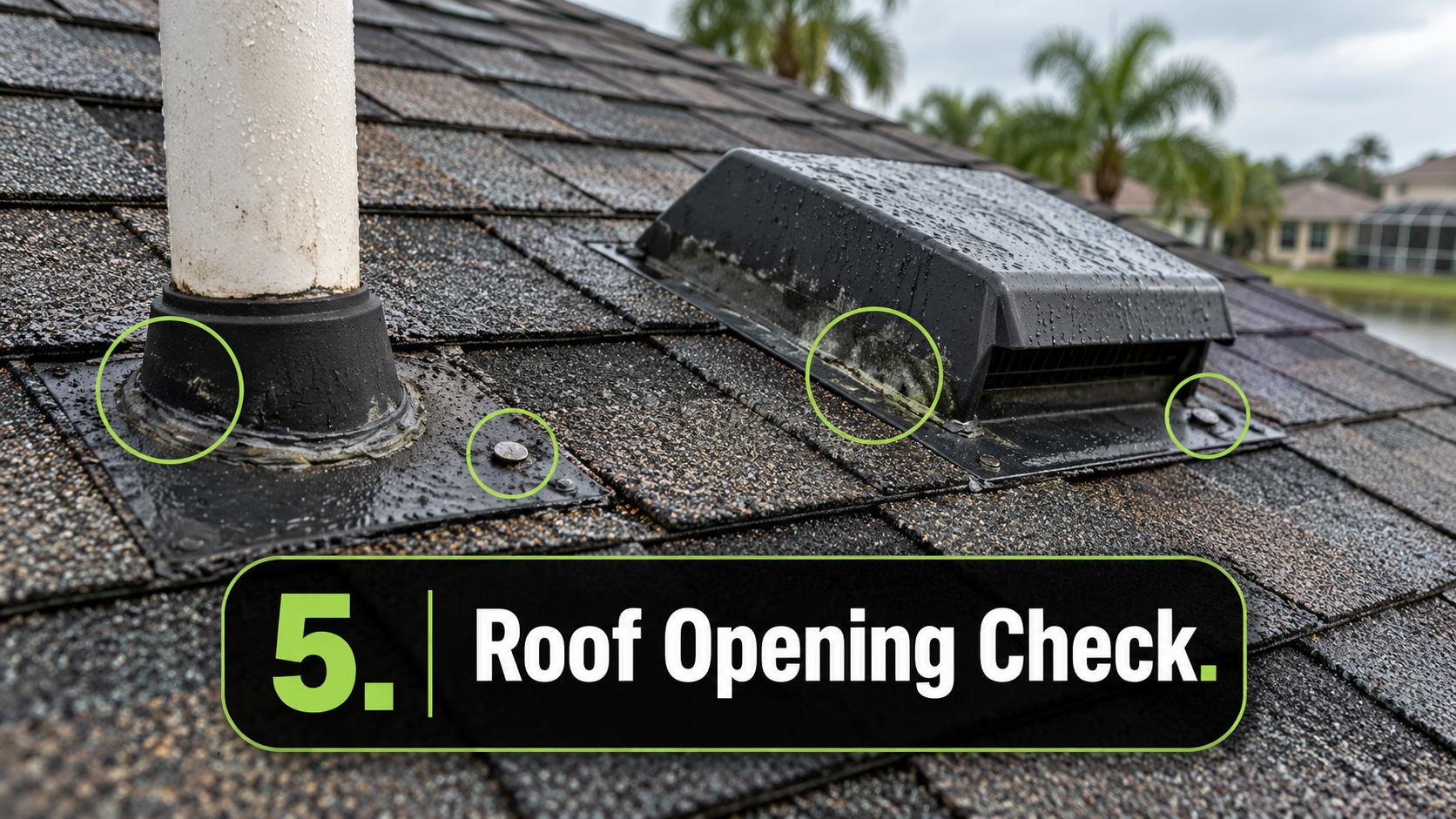
Viera FL asphalt shingle roof with pipe boot and roof vent showing light sealant wear and moisture after recent rain
Any opening through the roof needs to be sealed properly. Plumbing pipe boots, roof vents, exhaust vents, and other roof penetrations can become weak points after long exposure to sun, rain, humidity, and wind.
Warning signs include:
Cracked pipe boots: Rubber seals can split over time.
Loose vent bases: Wind and weather may shift components.
Rust around fasteners: Moisture may be reaching metal parts.
Water stains below vents: A small leak may be starting near the opening.
What this may mean: Roof penetrations may leak during heavy rain or wind-driven rain if the seal is damaged.
Limitation Note: Small roof penetration leaks may not show right away, but repeated moisture can affect decking, insulation, drywall, and ceiling materials.
6. Look for Roof Valley Debris
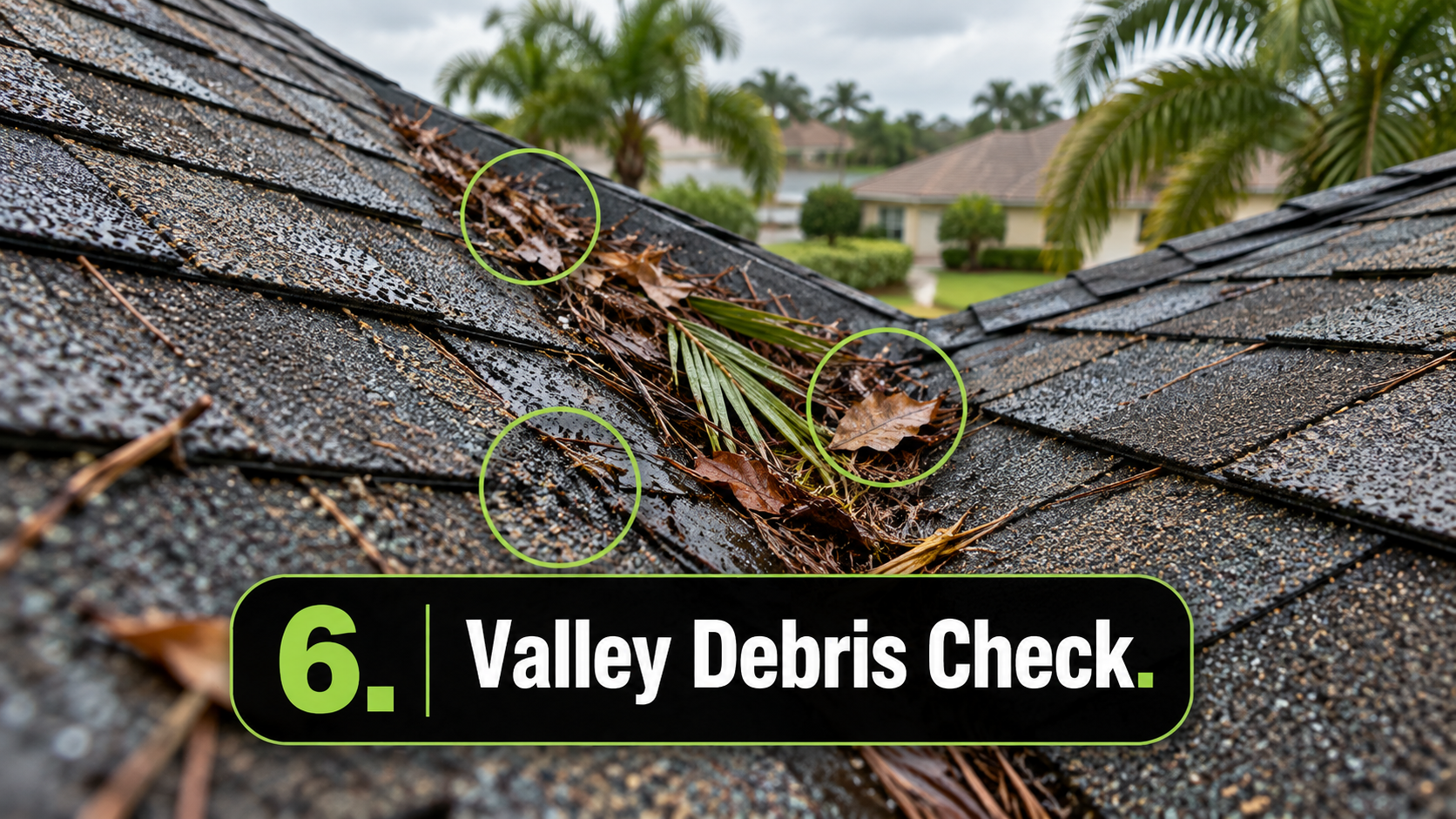
Viera FL asphalt shingle roof valley with palm fronds, leaves, pine needles, and debris buildup during fall roof maintenance.
Roof valleys collect water from two roof slopes, which makes them high-flow areas during rain. If debris collects in valleys, water may slow down or move under vulnerable roof materials.
Valley warning signs include:
Leaves or twigs in valleys: Debris can block normal drainage.
Dark staining: Moisture may be sitting longer than it should.
Uneven shingle wear: Valleys carry more water than other sections.
Leaks after steady rain: Water may be entering through a weak valley area.
What this may mean: Roof valleys should be clear before the next rainy period because blocked valleys can increase leak risk.
7. Check Attic Ventilation and Moisture
Cooler weather is a good time to think about attic conditions. In Viera’s humid climate, attic moisture can come from poor ventilation, condensation, roof leaks, bathroom fans, HVAC ducts, or storm-driven rain.
Attic warning signs include:
Dark roof decking stains: Moisture may be affecting the underside of the roof.
Damp insulation: Water may be entering or collecting inside the attic.
Musty odors: Trapped moisture may be present.
Rust on nail tips: Condensation or attic moisture may be affecting metal components.
What this may mean: Attic moisture should be checked because it may point to roof leaks, ventilation problems, storm damage, or humidity-related concerns.
Limitation Note: Attic moisture does not always mean the roof is leaking. A full inspection helps separate roof issues from ventilation, HVAC, plumbing, or indoor humidity concerns.
8. Review Soffits, Fascia, and Roof Edges
Roof edges are easy to overlook, but they can show important signs of moisture. Clogged gutters, wind-driven rain, and roof-edge wear can affect soffits, fascia, drip edge, and lower roofline areas.
Homeowners should look for:
Soft or stained fascia: Water may be affecting the roof edge.
Soffit staining: Water may be backing up or entering near the edge.
Peeling paint: Moisture may be affecting trim or exterior finishes.
Loose drip edge: Metal roof-edge protection may have shifted.
What this may mean: Roof-edge problems can create hidden moisture issues if they are not corrected before more rain arrives.
9. Watch for Ceiling Stains After Rain
Interior stains can be one of the clearest signs that water reached the inside of the home. However, the source is not always directly above the stain because water can travel along framing, insulation, or rafters.
Interior warning signs include:
Brown or yellow ceiling stains: These may suggest water intrusion.
Peeling paint: Moisture may be affecting interior finishes.
New stains after rain: The leak may still be active.
Recurring stains: The original source may not have been corrected.
What this may mean: Ceiling stains should be checked before moisture spreads into insulation, drywall, or framing.
10. Schedule a Professional Inspection if Multiple Signs Appear
Fall roof maintenance in Viera FL is especially helpful when several warning signs appear at the same time. A trained roofing professional can safely check shingles, gutters, flashing, roof penetrations, roof valleys, attic areas, and storm-related concerns.
An inspection may be helpful if you notice:
Missing or lifted shingles
Granules near gutters or downspouts
Clogged gutters or drainage problems
Loose flashing or cracked sealant
Roof debris or valley buildup
Attic moisture or musty odors
Ceiling stains after rain
Leaks during wind-driven rain
What this may mean: The goal is not to assume the worst. The goal is to understand whether your roof needs maintenance, repair, monitoring, or replacement planning.
FAQ: Fall Roof Maintenance in Viera, FL
Common questions Viera homeowners ask about fall roof maintenance, cooler weather, roof inspections, shingles, gutters, flashing, attic moisture, and rainy-season roof concerns.
Why should Viera homeowners check their roof in the fall?
Viera homeowners should check their roof in the fall because the roof may have gone through months of heat, humidity, rain, wind, and storm debris. Fall maintenance can help identify shingle wear, clogged gutters, flashing issues, attic moisture, and leak concerns before they get worse.
What are the most common fall roof problems in Viera, FL?
Common fall roof concerns include lifted shingles, granule loss, clogged gutters, roof valley debris, loose flashing, cracked pipe boots, attic moisture, ceiling stains, and roof-edge wear.
Does cooler weather affect Florida roofs?
Cooler weather may not bring freezing conditions to Viera, but seasonal changes can still highlight roof problems after rainy season. It is a good time to inspect drainage, shingles, flashing, attic ventilation, and roof edges.
Do I need a roof inspection if I do not see a leak?
Yes, a roof inspection may still be helpful. Some roof issues do not leak right away and may only show as minor shingle wear, loose flashing, gutter debris, attic moisture, or granule loss.
When should I schedule fall roof maintenance in Viera, FL?
You should schedule fall roof maintenance in Viera, FL after rainy season, after strong storms, before the next heavy rain period, or anytime you notice leaks, roof debris, shingle damage, clogged gutters, or attic moisture.
Conclusion
Fall roof maintenance in Viera FL is a smart step as cooler weather approaches. Heavy rain, humidity, wind, heat, debris, and tropical moisture can leave behind small roof concerns that are easy to miss from the ground.
Not every warning sign means you need a new roof. Some homes may only need gutter cleaning, minor repair, flashing work, pipe boot replacement, ventilation review, or continued monitoring. But waiting too long can allow small roof issues to become interior water damage or more expensive repairs.
If your Viera home has not had a roof inspection after rainy season, contact RoofLab to schedule an inspection and get clear guidance before the next round of seasonal weather.